Black Mould on Exterior Walls: Health Risks for Perth Families
- Mar 20
- 8 min read

Black mould growing on exterior walls presents more than an unsightly appearance problem for Perth homeowners. This persistent fungus releases spores that can infiltrate homes through windows, doors, and ventilation systems, creating respiratory hazards for families, particularly children, elderly residents, and anyone with existing health conditions. Understanding black mould exterior walls Perth risks helps protect family health.
Perth's unique climate creates ideal conditions for mould growth on external surfaces. The combination of coastal humidity, winter rainfall averaging 733mm annually, and limited airflow around properties means exterior walls remain damp for extended periods. When these conditions persist, black mould colonies establish themselves on render, brickwork, and painted surfaces, multiplying rapidly and releasing health-compromising spores into surrounding air.
What Black Mould Actually Is and Why It Grows in Perth
The Species Behind Black Mould
Black mould refers to several species of dark-coloured fungi, most commonly Stachybotrys chartarum and Aspergillus niger. These organisms thrive in environments with three essential elements: moisture, organic material, and moderate temperatures. Perth's exterior walls provide all three conditions during winter months when rain saturates porous surfaces and temperatures hover between 10-18°C.
How Black Mould Feeds and Multiplies
The fungus feeds on organic compounds found in paint, render, mortar, and accumulated dirt on wall surfaces. Once established, a single mould colony can release millions of microscopic spores daily. These spores remain airborne for hours, travelling through open windows and ventilation systems into living spaces where families spend most of their time.
Perth's High-Risk Properties
Properties with poor drainage, overhanging vegetation, or walls facing south receiving minimal sun exposure face the highest black mould exterior walls Perth risk. The shaded southern walls of Perth homes can remain damp for days after rainfall, creating perfect breeding grounds for mould establishment.
Proflo encounters these conditions regularly across Perth suburbs, particularly in properties built before modern moisture management standards. Regular gutter cleaning services help prevent the water overflow that contributes to wall saturation.
Documented Health Impacts of Black Mould Exposure
Medical research has established clear connections between mould exposure and respiratory health problems. The World Health Organization recognises indoor dampness and mould as significant health hazards, with exterior mould serving as a primary source of indoor contamination.
Respiratory System Effects
Black mould spores trigger inflammatory responses in lung tissue when inhaled. For healthy adults, short-term exposure might cause minor irritation including throat scratching, nasal congestion, or occasional coughing. However, prolonged exposure creates cumulative damage. A 2019 study published in the Journal of Allergy and Clinical Immunology found that individuals living in mould-affected homes showed 40% higher rates of chronic bronchitis compared to those in mould-free environments.
Children's Heightened Vulnerability
Children face disproportionate risks and vulnerable population risks. Their developing respiratory systems and higher breathing rates mean they inhale more spores relative to body weight. Research from the Australian Institute of Health and Welfare indicates children exposed to household mould develop asthma at rates 50% higher than unexposed peers. For Perth families, this translates to increased doctor visits, medication costs, and missed school days.
Allergic Reactions and Immune Response
Black mould produces mycotoxins, toxic compounds that trigger allergic reactions even in people without pre-existing allergies through mycotoxin exposure effects. Common symptoms include persistent sneezing and runny nose, red, itchy, or watery eyes, skin rashes and irritation, chronic headaches, and fatigue and difficulty concentrating.
The Australian Society of Clinical Immunology and Allergy notes that mould sensitivity affects approximately 15% of Australians. For these individuals, even low-level mycotoxin exposure effects cause significant discomfort and health disruption.
Severe Health Complications
Immunocompromised individuals, including those undergoing chemotherapy, living with HIV, or taking immunosuppressive medications, face serious vulnerable population risks from black mould exposure. The fungus can cause invasive infections when spores colonise lung tissue, leading to potentially life-threatening conditions requiring hospitalisation.
Elderly Resident Vulnerabilities
Elderly Perth residents represent another population facing vulnerable population risks. Age-related decline in immune function means seniors cannot effectively combat mould spores. A 2020 study in Environmental Health Perspectives found that elderly individuals exposed to residential mould showed 60% higher rates of respiratory infections requiring medical intervention, demonstrating significant mycotoxin exposure effects.
How Exterior Mould Enters Your Home
Air Infiltration Through Building Envelope
Many Perth homeowners mistakenly believe exterior mould remains outside, posing no indoor health risks. This assumption proves dangerously incorrect. Several pathways allow mould spores to migrate from external walls into living spaces.
Perth homes, particularly those built before 2006 building code updates, lack comprehensive air sealing. Gaps around window frames, door jambs, and wall penetrations for pipes and cables create channels for spore-laden air to enter. During windy conditions common in Perth's spring and summer months, pressure differentials force outdoor air and its mould content through these openings.
Testing conducted by building scientists shows that homes with visible exterior mould have indoor spore counts 300-500% higher than homes with clean exterior walls, even when windows remain closed.
HVAC System Contamination
Split-system air conditioners and ducted cooling systems draw outdoor air for ventilation. When exterior walls near intake vents harbour mould colonies, spores enter the system and distribute throughout the home through HVAC system contamination. The cool, sometimes damp conditions inside HVAC components allow spores to establish secondary colonies, creating ongoing indoor contamination even after exterior cleaning.
This HVAC system contamination creates persistent health problems. The secondary colonies inside ductwork continue releasing spores into indoor air, meaning exterior cleaning alone may not resolve HVAC system contamination without additional duct treatment.
Direct Transfer and Cross-Contamination
Family members, pets, and visitors brush against mould-affected exterior walls, collecting spores on clothing, skin, and fur. These spores transfer indoors, settling on furniture, carpets, and bedding where they can remain viable for months. Children playing near affected walls face particularly high exposure rates.
Perth's Climate Creates Perfect Mould Conditions
Winter Rainfall and Wall Saturation
Perth's Mediterranean climate presents unique mould challenges compared to other Australian capitals. The extended dry summer followed by concentrated winter rainfall creates cyclical mould growth patterns that catch many homeowners unprepared with black mould exterior walls Perth problems.
Between May and August, Perth receives 80% of its annual rainfall. During these months, exterior walls absorb significant moisture, particularly porous materials like render and brick. South-facing walls that never receive direct sunlight can remain damp for 3-5 days after rainfall events. This persistent dampness allows mould spores, always present in outdoor air, to germinate and establish colonies.
Coastal Salt and Moisture Retention
Properties in coastal suburbs from Fremantle to Quinns Rocks face additional challenges from salt-laden air. Salt particles attract and retain moisture on wall surfaces, extending dampness periods and accelerating mould growth. Pressure washing services specifically address these coastal conditions, removing salt deposits that perpetuate moisture problems.
Humidity Fluctuations and Condensation
Perth's winter mornings frequently see temperatures drop to 8-10°C, followed by afternoon warming to 18-20°C. These temperature swings create condensation on exterior walls, particularly on surfaces shaded from afternoon sun. The condensation provides the moisture mould requires, even during weeks without rainfall.
Vegetation and Airflow Restrictions
Perth's suburban properties often feature mature trees and dense landscaping that restrict airflow around homes. While vegetation provides shade and aesthetic value, it prevents walls from drying adequately after rain. Overhanging branches drip onto walls hours after rainfall ends, and fallen leaves decompose against wall surfaces, providing organic material that feeds mould growth.
Identifying Black Mould on Your Property's Exterior
Visual Indicators
Early detection prevents minor mould problems from escalating into health hazards. Perth homeowners should inspect exterior walls quarterly, with particular attention during and after winter months.
Black mould appears as dark patches ranging from grey-black to deep black. Unlike dirt or staining, mould has a slightly fuzzy or velvety texture when examined closely. It typically appears first in corners, under eaves, around downpipes, and on south-facing walls receiving minimal sunlight.
Mould spreads in irregular patterns rather than uniform staining. A single colony might start as a small spot but expand to cover several square metres within weeks under favourable conditions.
Smell and Environmental Clues
Mould produces distinctive musty, earthy odours. If you smell this scent near exterior walls or notice it entering through windows, mould likely exists on nearby surfaces. The odour intensifies during humid conditions or immediately after rainfall.
Check for environmental factors that indicate black mould exterior walls Perth risk: walls that remain dark or damp hours after rain, peeling or bubbling paint suggesting moisture intrusion, efflorescence (white salt deposits) indicating water movement through walls, and staining patterns that follow water flow from gutters or downpipes.
Gutter Condition as Risk Indicator
Properties with blocked or overflowing gutters face significantly higher exterior mould risks. When gutters fail to channel water away properly, overflow cascades down walls, saturating surfaces and creating ideal mould conditions.
Professional Removal Vs DIY Approaches
Limitations of DIY Removal
Many Perth homeowners attempt DIY mould removal using household bleach or pressure washers hired from hardware stores. While this approach might address surface appearance temporarily, it rarely eliminates mould completely and can create additional problems requiring professional mould treatment.
Household bleach kills surface mould but does not penetrate porous materials like render and brick where mould roots (hyphae) establish themselves. Within weeks, the colony regrows from these embedded roots. Additionally, bleach application without proper containment spreads spores into surrounding air, potentially increasing indoor contamination during the cleaning process.
Consumer-grade pressure washers lack the pressure consistency and appropriate nozzles for effective mould removal. Excessive pressure damages render and mortar, creating surface roughness that makes future mould establishment easier. Insufficient pressure leaves mould roots intact, resulting in rapid regrowth without proper professional mould treatment.
Professional Treatment Advantages
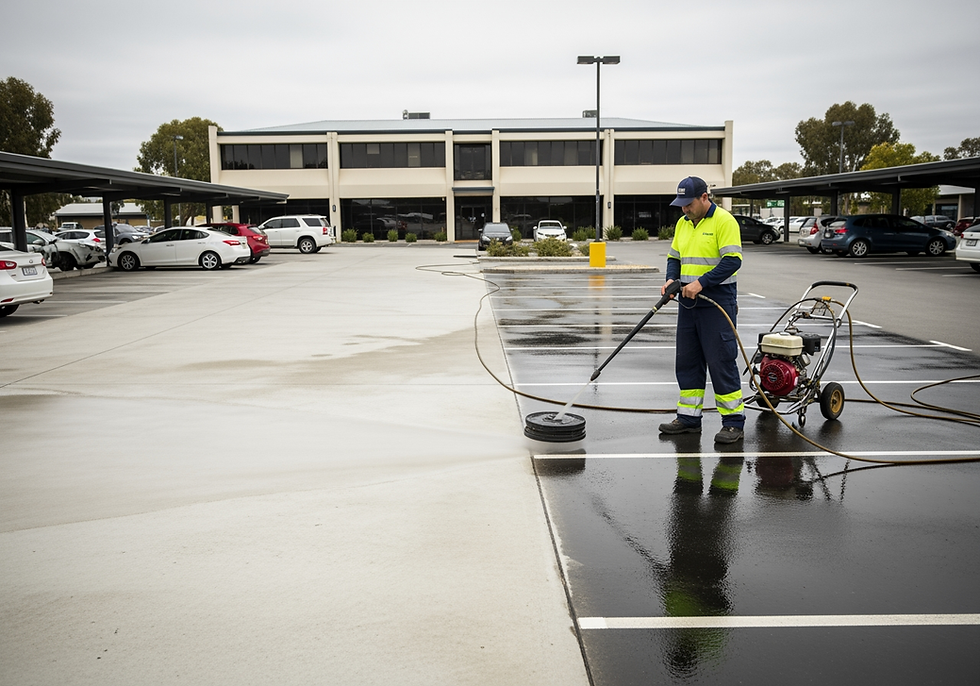
Professional exterior cleaning services employing professional mould treatment use multi-step processes that address both visible mould and underlying causes. This includes pre-treatment with appropriate biocides that penetrate porous materials, controlled pressure washing that removes mould without damaging surfaces, and post-treatment applications that inhibit regrowth.
Professional equipment delivers consistent pressure with specialised nozzles designed for different surface types. Technicians understand which cleaning solutions work effectively on specific mould species and surface materials without causing damage. Commercial cleaning services extend these same professional mould treatment standards to multi-unit residential properties and commercial buildings where mould affects multiple families or businesses.
Long-Term Prevention Strategies
Effective mould management through professional mould treatment extends beyond removal to addressing underlying moisture problems. Professional assessments identify drainage issues, gutter problems, and vegetation management needs that contribute to mould growth. Implementing these recommendations prevents recurrence, protecting family health long-term.
When to Seek Professional Assessment
Extensive Mould Coverage
Several situations warrant immediate professional evaluation for vulnerable population risks rather than delayed action or DIY attempts.
When black mould covers more than 3-4 square metres of exterior wall surface, the colony has established deep roots within porous materials. At this scale, DIY removal proves ineffective and potentially dangerous due to massive spore release during cleaning attempts.
Proximity to Living Spaces
Mould growing near windows, doors, or air conditioning units poses immediate health risks due to direct pathways into homes. Professional removal with proper containment prevents spore infiltration during the cleaning process.
Vulnerable Family Members
Households with young children, elderly residents, pregnant women, or individuals with respiratory conditions represent vulnerable population risks and should prioritise professional mould removal. The health risks of improper DIY attempts outweigh potential cost savings.
Recurring Mould Problems
If mould returns within months of cleaning, underlying moisture problems require professional diagnosis. Repeated DIY attempts waste time and money while family members continue exposure to health hazards including mycotoxin exposure effects.
Protecting Your Family's Health
Black mould exterior walls Perth problems represent a preventable health hazard for Perth families. The combination of respiratory irritation, allergic reactions from mycotoxin exposure effects, and serious complications for vulnerable population risks makes prompt, effective removal through professional mould treatment essential rather than optional.
Professional exterior cleaning addresses both immediate mould presence and underlying conditions that allow establishment. For Perth homeowners concerned about black mould on their property, contact Proflo on 08 6150 5924 for assessment of extent, health risks, and comprehensive removal solutions.
The investment in professional mould removal protects more than property appearance; it safeguards family health, prevents medical expenses from mould-related illnesses, and maintains home value by addressing moisture problems before they cause structural damage. With Perth's climate creating ongoing mould risks, establishing a relationship with experienced exterior cleaning professionals ensures your family's living environment remains healthy year-round.


Comments