Why Retail Centres Need Regular Pressure Washing
- Mar 11
- 9 min read

First impressions drive retail success. Before customers evaluate products or prices, they judge cleanliness. A retail centre with stained concrete, grimy walkways, or oil-marked car parks signals neglect - and shoppers notice. Research shows 95% of consumers consider cleanliness when choosing where to shop, with 60% avoiding businesses that appear poorly maintained.
Perth's retail centres face unique environmental challenges. Coastal salt spray, summer dust storms, winter rain, and constant foot traffic create layers of grime that standard cleaning can't remove. Add vehicle emissions, food spills, chewing gum, and organic growth, and surfaces deteriorate rapidly. Regular retail pressure washing isn't just about appearance - it's about protecting property value, ensuring safety compliance, and maintaining the competitive advantage that attracts tenants and customers.
The Business Case For Clean Retail Environments
Customer Behaviour And Revenue Impact
Clean retail environments directly influence spending behaviour. Studies from the Australian Retail Association show customers spend 23% more time in well-maintained shopping centres compared to visibly dirty competitors. Extended dwell time translates to increased purchases across all tenant categories.
The connection between cleanliness and perceived value runs deep. When customers encounter stained walkways or dirty facades, they unconsciously lower their expectations for product quality and service standards. Premium retailers particularly suffer from this association - luxury brands depend on immaculate surroundings to justify pricing.
Mystery shopper data reveals 73% of shoppers form their first impression within 90 seconds of arrival. Car park appearance, entrance cleanliness, and walkway condition dominate these initial judgements. Retail centres that maintain pristine exteriors through shopping centre cleaning programs report higher customer satisfaction scores and stronger tenant retention.
Tenant Attraction And Retention
Property managers competing for quality tenants face intense scrutiny during lease negotiations. Prospective retailers evaluate maintenance standards as indicators of management competence and long-term property value. Visible grime, stained surfaces, or neglected common areas signal potential problems that drive premium tenants toward better-maintained competitors.
Lease renewal conversations increasingly centre on property presentation. Tenants paying premium rates expect management to protect their brand image through consistent retail property maintenance. When retail centres fall behind cleaning schedules, tenants leverage visible neglect during rent negotiations or explore relocation options.
National retail chains include property condition clauses in lease agreements, specifying minimum maintenance standards for common areas. Centres that fail regular inspections risk breach notices or compensation claims. Professional pressure washing services provide documented evidence of compliance, protecting both property value and tenant relationships.
Safety And Liability Considerations
Slip Hazards And Public Safety
Algae, moss, and organic growth create dangerous slip hazards on retail surfaces. Perth's winter rainfall activates dormant spores, transforming seemingly clean concrete into slippery surfaces within days. High-traffic areas near entrances, loading zones, and covered walkways develop these hazards fastest.
Public liability claims from slip-and-fall accidents cost Australian retail centres an average of $87,000 per incident when legal fees and medical expenses combine. Beyond financial costs, serious injuries trigger WorkSafe investigations, media attention, and reputation damage that affects customer confidence for months.
Regular retail pressure washing removes organic growth before it becomes hazardous. Professional services target high-risk zones with appropriate cleaning solutions and surface treatments that extend protection between scheduled cleanings. This preventative approach costs substantially less than reactive cleaning after incidents occur.
Compliance With Australian Standards
Australian Standard AS 4586 specifies slip resistance requirements for pedestrian surfaces. Retail centres must maintain these standards across all public areas, with regular testing and documentation. Accumulated grime reduces surface friction, pushing compliant surfaces below acceptable thresholds.
Council inspections and insurance audits increasingly scrutinise maintenance records. Centres lacking documented cleaning schedules face increased premiums or coverage restrictions. Professional commercial retail cleaning services provide detailed reports showing compliance with safety standards and maintenance requirements.
Property managers bear legal responsibility for maintaining safe environments. Courts consistently rule against centres that cannot demonstrate regular maintenance programs, even when specific incidents seem unforeseeable. Scheduled pressure washing creates the documentation trail that protects against liability claims.
Perth-Specific Environmental Challenges
Coastal Salt And Wind-Borne Debris
Perth's coastal proximity exposes retail centres to salt-laden air that accelerates surface deterioration. Salt crystals penetrate concrete pores, creating white efflorescence stains that standard cleaning cannot remove. Over time, salt causes spalling and surface breakdown that requires expensive repairs.
Wind carries sand, dust, and organic material from surrounding areas, depositing layers that trap moisture and promote algae growth. Summer dust storms leave thick residue that bonds to surfaces, creating stubborn stains that darken over time. Without regular removal, these deposits become increasingly difficult to clean.
Shopping centres within 10 kilometres of the coast experience accelerated deterioration rates. ProFlo's experience across Perth's retail sector shows coastal properties require 40% more frequent shopping centre cleaning to maintain comparable appearance standards to inland locations.
Seasonal Maintenance Demands
Perth's distinct seasons create varying maintenance challenges. Autumn leaf fall concentrates around entry points and drainage areas, decomposing into organic stains that penetrate porous surfaces. Winter rainfall activates algae growth, particularly in shaded areas with limited sun exposure.
Spring pollen creates yellow-green films on horizontal surfaces, while summer heat bakes spills and stains into concrete, making removal progressively harder. Retail centres that delay cleaning until visible problems emerge face exponentially higher restoration costs compared to regular maintenance schedules.
Professional retail pressure washing services adjust techniques seasonally. Winter cleaning focuses on algae prevention and drainage clearance, while summer services target oil stain removal and concrete restoration. This adaptive approach maintains consistent appearance standards year-round.
Surface Types And Cleaning Requirements
Concrete And Paver Maintenance
Concrete driveways, car parks, and walkways dominate retail centre surfaces. These porous materials absorb oil, food spills, and organic matter, creating permanent stains without proper cleaning. Standard mopping or hosing spreads contamination without removing embedded material.
High-pressure cleaning with appropriate detergents breaks down oil molecules and lifts embedded grime from concrete pores. Professional equipment delivers consistent pressure and temperature control that removes stains without damaging surface integrity. This process restores original appearance while extending concrete lifespan.
Paver surfaces require specialised attention. Car park pressure washing must remove grime without displacing jointing sand or damaging surface sealants. Experienced operators adjust pressure levels and nozzle angles to clean effectively while preserving structural integrity. Amateur attempts frequently cause joint damage that leads to paver movement and trip hazards.
Facade And Entrance Cleaning
Building facades accumulate atmospheric pollution, creating dark streaks that undermine architectural appeal. Glass surfaces develop mineral deposits from sprinkler systems and rain splash, reducing transparency and light transmission. Entry areas experience concentrated soiling from foot traffic and door mechanisms.
Facade cleaning requires pressure control and appropriate cleaning agents for different materials. Brick, rendered concrete, metal panels, and glass each demand specific techniques. Incorrect pressure or chemicals cause permanent damage - etched glass, stripped paint, or spalled masonry.
Regular facade maintenance prevents deep staining that requires aggressive restoration. Professional services schedule cleaning based on exposure levels and material types, maintaining consistent appearance across all visible surfaces. This comprehensive approach ensures retail centres present unified, well-maintained images.
Economic Benefits Of Preventative Maintenance
Avoiding Capital Expenditure
Neglected surfaces deteriorate rapidly. Oil stains penetrate deep into concrete, eventually requiring diamond grinding or replacement. Organic growth damages surface integrity, creating cracks that expand through freeze-thaw cycles. What begins as cosmetic deterioration becomes structural failure requiring major capital investment.
Regular car park pressure washing costs approximately 15% of surface replacement expenses. A typical retail centre car park cleaning runs $3,000-$5,000 quarterly, while resurfacing the same area costs $80,000-$120,000. Preventative retail property maintenance extends surface life by 8-12 years, delivering substantial return on investment.
Property valuations directly reflect maintenance standards. Centres with documented maintenance programs achieve 12-18% higher valuations than comparable properties with reactive maintenance approaches. This premium compounds over time, significantly impacting sale prices and refinancing terms.
Operational Efficiency
Scheduled maintenance programs reduce emergency cleaning costs. Reactive cleaning for special events or tenant complaints typically costs 200-300% more than planned services due to rush scheduling and intensive labour requirements. Regular programs eliminate crisis situations that disrupt operations and strain budgets.
Professional cleaning services optimise scheduling around retail operations, minimising customer disruption. Night and early morning sessions complete work before peak traffic, maintaining business continuity. This coordination proves impossible with emergency cleaning that occurs during trading hours.
Documented maintenance programs streamline insurance claims and tenant disputes. When incidents occur, clear records demonstrate reasonable care and maintenance standards, protecting against liability claims and supporting property manager positions during negotiations.
Professional Equipment And Expertise
Commercial-Grade Pressure Washing Systems
Professional pressure washing equipment delivers capabilities beyond consumer-grade machines. Commercial units generate 3,000-4,000 PSI with heated water options that dissolve oil and organic matter effectively. Flow rates of 8-10 gallons per minute clean large areas efficiently, reducing labour costs and completion times.
Temperature control proves critical for different contaminants. Hot water cleaning removes oil stains 60% faster than cold water, reducing chemical requirements and environmental impact. Professional operators adjust temperature, pressure, and detergent concentration based on surface type and contamination level.
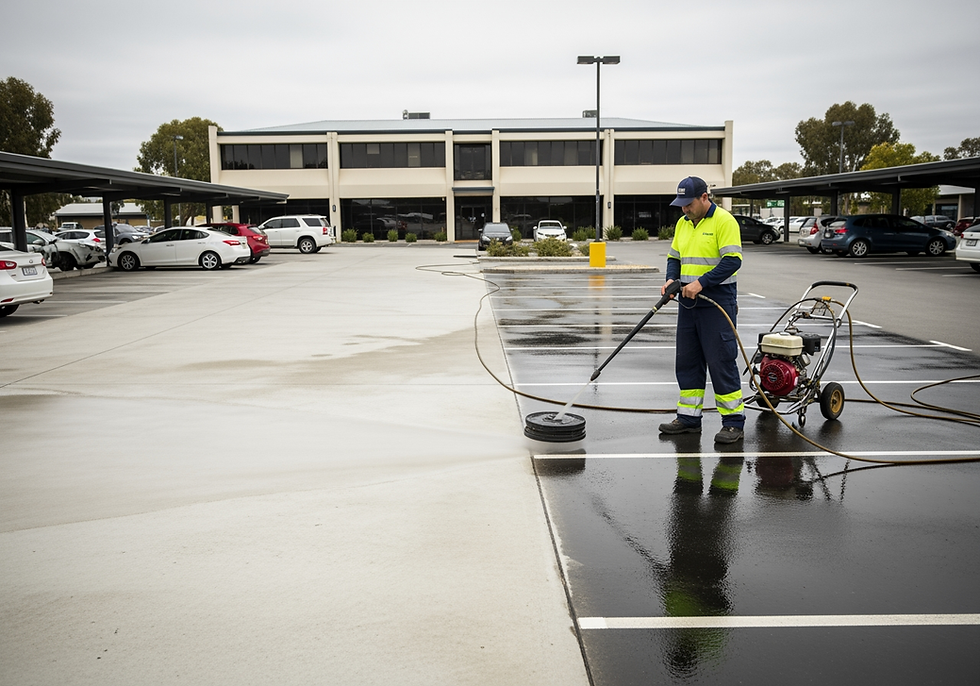
Commercial cleaning equipment includes surface cleaners that maintain consistent pressure and prevent streaking across large areas. These attachments clean car parks and walkways uniformly, eliminating the uneven results common with handheld wands. Vacuum recovery systems capture wastewater, preventing contamination of stormwater systems and ensuring environmental compliance.
Technical Knowledge And Safety Standards
Professional operators understand surface limitations and chemical interactions. Different concrete mixes, sealants, and surface treatments require adjusted cleaning approaches. Incorrect techniques cause spalling, etching, or sealant removal that creates expensive repair requirements.
Safety protocols protect workers, customers, and property. Professional services maintain appropriate insurance coverage, WorkSafe compliance, and operator certification. Equipment maintenance ensures reliable performance and prevents failures that cause property damage or injuries.
ISO certification demonstrates commitment to quality standards and continuous improvement. Certified operators follow documented procedures, maintain equipment to manufacturer specifications, and participate in ongoing training. These standards ensure consistent results across all projects and protect client interests.
Developing Effective Maintenance Schedules
Frequency Recommendations
High-traffic retail centres require quarterly retail pressure washing as baseline maintenance. Car parks, main walkways, and entrance areas benefit from monthly attention to high-impact zones. Loading docks and food court exteriors need more frequent cleaning due to concentrated contamination.
Seasonal adjustments optimise results and costs. Pre-winter cleaning removes organic matter before wet weather promotes growth. Post-summer cleaning addresses accumulated dust and heat-baked stains. Spring cleaning prepares centres for increased foot traffic during peak shopping seasons.
Property managers should assess traffic patterns, tenant mix, and environmental exposure when establishing schedules. Centres with multiple food vendors need more frequent commercial retail cleaning than fashion-focused properties. Coastal locations require additional sessions compared to inland centres.
Monitoring And Adjustment
Effective programs include regular inspections that identify emerging problems before they become visible to customers. Professional services photograph high-traffic areas during each visit, creating visual records that track deterioration rates and justify schedule adjustments.
Tenant feedback provides valuable maintenance insights. Retailers notice changes in foot traffic and customer comments about cleanliness. Property managers who incorporate tenant observations into maintenance planning achieve higher satisfaction scores and stronger lease renewals.
Seasonal weather variations require schedule flexibility. Unusually wet winters accelerate algae growth, while extended dry periods increase dust accumulation. Professional services adjust timing based on actual conditions rather than rigid calendar schedules, optimising results and budget efficiency.
Selecting Professional Cleaning Partners
Evaluation Criteria
Experience in retail environments separates qualified contractors from general cleaning services. Retail centres require coordination with multiple tenants, security protocols, and operational constraints that residential or industrial cleaning doesn't involve. Contractors lacking retail experience create disruptions that affect customer experience and tenant relationships.
Equipment capabilities determine efficiency and results quality. Contractors using consumer-grade equipment cannot achieve professional standards on large commercial properties. Request equipment specifications, including pressure ratings, flow rates, and surface cleaner capabilities before engaging services.
Insurance coverage and certification protect property managers from liability. Verify public liability insurance exceeds $20 million, workers compensation coverage includes all operators, and certifications remain current. Request copies of insurance certificates and add property ownership entities as additional insured parties.
Service Scope And Documentation
Comprehensive proposals specify exact cleaning areas, methods, and frequency. Vague descriptions like "general pressure washing" create disputes about scope and results. Detailed proposals protect both parties by establishing clear expectations and measurable outcomes.
Professional services provide post-cleaning reports documenting work completed, areas requiring attention, and recommendations for maintenance improvements. These reports create audit trails for insurance purposes and support budget planning for capital improvements.
Environmental compliance documentation demonstrates responsible waste management. Professional contractors capture and properly dispose of wastewater containing oil, chemicals, and suspended solids. This compliance protects property managers from environmental violations and stormwater system contamination.
Protecting Your Retail Investment
Retail centre success depends on consistent property presentation that attracts customers and supports tenant businesses. Regular shopping centre cleaning protects this investment by maintaining appearance standards, preventing safety hazards, and extending surface lifespans. The relatively modest cost of scheduled retail property maintenance delivers substantial returns through enhanced property values, reduced liability exposure, and competitive advantages in tenant attraction.
Perth's environmental conditions - coastal salt exposure, seasonal weather variations, and urban pollution - accelerate surface deterioration that undermines retail appeal. Professional pressure washing addresses these challenges with commercial equipment, technical expertise, and documented compliance that protects property managers and ownership groups.
Property managers evaluating maintenance programs should consider the comprehensive benefits pressure washing delivers beyond surface appearance. Safety compliance, liability protection, tenant satisfaction, and capital expenditure deferral justify investment in regular professional services. The question isn't whether retail centres need pressure washing, but rather how frequently and comprehensively to implement programs that protect property value and support business success.
Coordinating pressure washing with gutter cleaning and solar panel maintenance creates comprehensive exterior care that addresses all property surfaces efficiently. For retail centre managers seeking experienced pressure washing specialists, contact us for detailed assessments and customised maintenance programs. With 33+ years serving Perth's commercial property sector, the team understands the unique challenges retail environments face and delivers solutions that maintain competitive advantages while protecting property investments.


Comments