Why Service Stations Need Slip-Resistant Forecourts Before Heavy Rain
- 2 hours ago
- 9 min read
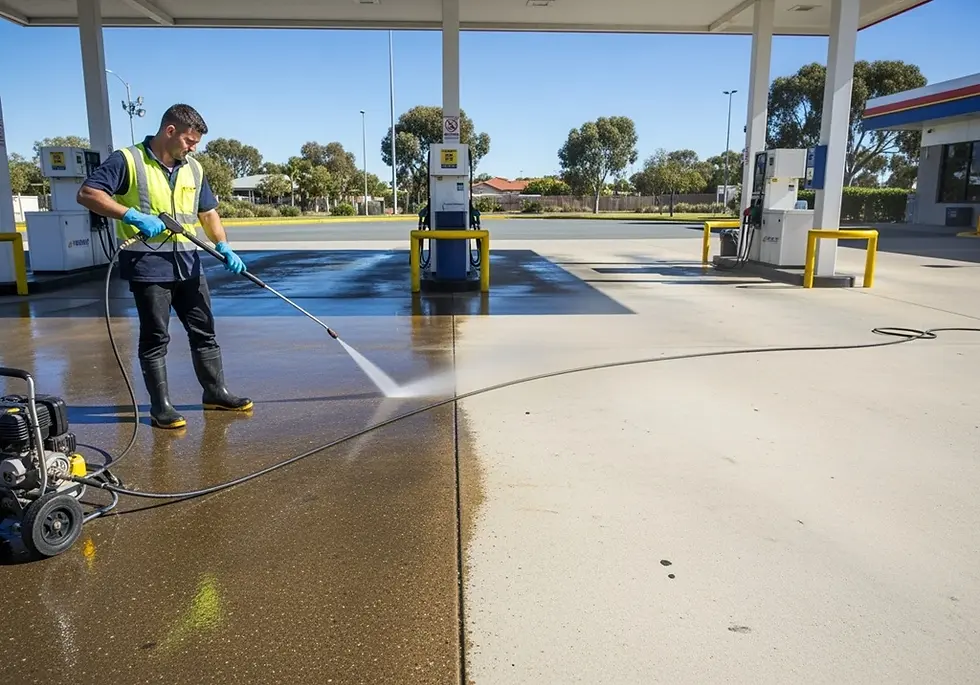
Fuel spills, oil residue, and rainwater create a dangerous combination on service station forecourts. Perth's unpredictable winter weather makes this risk particularly acute - a sudden downpour can transform a surface that felt adequately safe during dry conditions into a genuine slip hazard within minutes. The problem is largely invisible until rainfall activates it, which is precisely why service stations that wait for rain to identify the hazard are already managing the consequences rather than preventing them.
Service stations face contamination challenges that most commercial properties do not encounter. Every vehicle that pulls up to a bowser deposits microscopic layers of fuel, engine oil, and brake fluid onto the forecourt. Over Perth's extended dry season - which can run for months without significant rainfall - these petroleum-based substances bond progressively with concrete, creating an invisible film that provides adequate traction in dry conditions but becomes dangerously slippery when wet.
The regulatory and liability context adds urgency to this maintenance challenge. WorkSafe WA requires commercial property owners to maintain safe premises, and service stations carry heightened obligation given their constant foot traffic and inherent fuel-handling environment. Proactive forecourt safety wash before Perth's wet season is the practical approach to meeting these obligations before conditions test them.
The Science Behind Forecourt Slip Hazards
How Petroleum Products Bond with Concrete
Concrete appears solid and textured, but its porous surface structure is what makes petroleum contamination so persistent. Fuel and oil molecules fill the microscopic channels and valleys that normally provide grip underfoot, creating a smooth layer that is invisible to observation in dry conditions. This contamination does not wash away with occasional light rainfall - it requires the mechanical force and chemical action of professional service station cleaning to remove.
Perth's climate intensifies the bonding process. The extended dry months that characterise Perth summers allow petroleum contaminants to accumulate and progressively cure into the concrete surface. Each week without cleaning adds another layer of material that bonds more firmly than the previous one. By the time autumn arrives and rain approaches, forecourts in high-traffic locations may carry months of accumulated contamination that has hardened through repeated heat and UV exposure.
How Rain Transforms the Hazard
The slip hazard mechanism is straightforward. When rainwater contacts petroleum-saturated concrete, the water cannot penetrate or flush the oil film. Instead, it sits on top of the oiled layer, creating a lubricating surface between the concrete and any foot traffic. Light rain is particularly hazardous - heavy downpours eventually dilute and disperse some surface contamination, but the first gentle rain creates the thin lubricating film that provides almost no friction.
Temperature changes compound this dynamic. Perth's cool winter mornings cause petroleum deposits to thicken and become more viscous. When rain arrives onto these cold, thick deposits, the resulting surface film is particularly treacherous. This combination - cold concrete, thickened petroleum deposits, and water - represents the worst-case slip conditions that forecourt safety wash before winter is specifically designed to prevent.
Why Standard Cleaning Methods Fail
Hosing, Sweeping, and Domestic Equipment Limitations
Standard cleaning responses to forecourt contamination share a fundamental limitation: they cannot break the molecular bonds between petroleum residues and concrete pores. Water alone moves contamination from one area of the forecourt to another rather than removing it from the surface. In some cases, hosing down a petroleum-contaminated forecourt distributes the oil film across a wider area than it previously occupied.
Mechanical sweeping and domestic equipment face the same constraint. Brooms and standard sweepers remove visible debris from the forecourt surface but leave the invisible petroleum film intact. A forecourt that has been swept and appears clean may still carry the contamination layer that will activate as a slip hazard within minutes of rainfall. This creates a false sense of security that is more dangerous than acknowledged neglect.
What Commercial-Grade Forecourt Cleaning Requires
Effective forecourt maintenance requires three elements working together: sufficient pressure to dislodge petroleum bonds from concrete pores, heated water to emulsify petroleum products for proper removal, and industrial-strength degreasers that break molecular bonds between fuel residues and concrete. Commercial pressure washing equipment delivers pressure levels substantially above what domestic units produce - enough force to dislodge contamination that has been bonding with concrete through an entire Perth summer.
ProFlo operates commercial-grade pressure washing systems with heating capability and appropriate degreasing agents for petroleum contamination. Heated water makes a critical difference to outcomes - petroleum products soften and emulsify at elevated temperatures, allowing them to be flushed away rather than redistributed. Cold water pressure washing can address surface contamination but leaves deeper petroleum deposits that will reactivate when rain arrives.
The Pre-Rain Window: Timing Your Forecourt Maintenance
Perth's Weather Patterns and the Preparation Window
Perth's Bureau of Meteorology provides detailed rainfall forecasts that enable proactive service station cleaning scheduling. Seven-day forecasts identify approaching weather systems with sufficient lead time to complete professional cleaning before significant rain arrives. The optimal approach is cleaning completed in this pre-rain window when surfaces are dry - conditions that allow degreasers to penetrate and work effectively before wash water removes them.
Pre-winter cleaning in late March or April prepares forecourts before Perth's wet season intensifies through May and June. This timing removes the contamination that has been accumulating through summer and autumn, before heavy rain creates the hazardous conditions that inadequately cleaned forecourts cannot withstand. Post-winter cleaning in September or October then addresses the contamination that has built through the wet months before summer's heat begins curing it into the surface.
High-Risk Locations and Additional Considerations
Coastal service stations across Perth's western and southern suburbs face compounded contamination from salt spray carried inland by Indian Ocean weather systems. Salt combines with fuel residues to create particularly stubborn deposits that require professional service station cleaning techniques rather than standard approaches. Properties in areas like Naval Base and Cockburn benefit from pre-winter cleaning that specifically addresses both petroleum and salt components of the contamination.
High-traffic service stations on major routes may require cleaning between the principal seasonal services. Properties serving heavy vehicle traffic or located on heavily used arterial roads experience accelerated contamination accumulation that standard biannual cleaning may not adequately address. Pressure washing scheduled on a quarterly basis provides the maintenance frequency that high-contamination locations require to maintain safe, slip-resistant surfaces through the entire year.
Commercial-Grade Pressure Washing: What Actually Works
Pressure, Heat, and Chemistry Working Together
Commercial forecourt cleaning is not a single intervention but a combination of pressure, thermal energy, and chemical action working together. The pressure component dislodges petroleum deposits that have bonded with concrete through the mechanical force of high-velocity water. The thermal component emulsifies oils and greases, converting them from their bonded solid state into a liquid that water can flush from the surface. The chemical component - specialised degreasers - breaks the molecular bonds that hold petroleum residues in concrete pores.
These three elements must be properly combined and applied with technique appropriate to the surface condition. New concrete requires different pressure settings than weathered surfaces that have been contaminated for years. Working systematically from high points toward drainage ensures that contaminated wash water flows away from already-cleaned areas rather than crossing them. Overlapping cleaning passes prevent streaking and ensure complete coverage across the entire forecourt surface.
Professional Technique and Surface Restoration
The measurable outcome of professional forecourt safety wash is restored concrete texture. Petroleum contamination fills the surface texture that provides grip - removing this contamination exposes the concrete's natural profile, which provides dramatically better traction in wet conditions. The difference between a contaminated and professionally cleaned forecourt is not merely cosmetic - it is a functional difference in the surface's ability to provide safe footing when wet.
Gutter cleaning Perth services scheduled alongside forecourt cleaning during the same pre-winter maintenance visit address the blocked gutters that would otherwise dump concentrated water onto the freshly cleaned forecourt during the first rain event. Managing both maintenance tasks in the same visit ensures that the cleaning investment is not undermined by gutter overflow directing water and roof debris onto the treated surface.
Drainage Systems and Environmental Compliance
Contaminated Runoff Management
Forecourt wash water carries petroleum products that cannot legally enter Perth's stormwater drainage system. The wash water generated during commercial forecourt cleaning contains petroleum hydrocarbons at concentrations far above regulatory thresholds for stormwater discharge. Professional service station cleaning operations use containment methods that direct all wash water toward designated collection points with appropriate oil-water separation before any discharge.
This is not optional compliance activity - it is a legal requirement under WA environmental protection regulations that applies to any commercial cleaning activity generating petroleum-contaminated runoff. Service station operators who engage cleaning services without appropriate water management protocols carry environmental liability for any stormwater contamination that results from cleaning activities conducted on their premises.
Regulatory Requirements for Perth Service Stations
Oil-water separators on service station sites require regular maintenance to function within their design capacity. A separator that has not been serviced before a major forecourt cleaning operation may be overwhelmed by the volume of contaminated water the cleaning generates, potentially causing bypass of untreated water into drainage. Pre-rain forecourt cleaning should be coordinated with separator inspection to confirm that the drainage system can handle the wash water volumes the cleaning will produce.
Documentation of cleaning schedules and completion provides evidence of compliance due diligence. WorkSafe WA improvement notices and Environmental Protection Authority enforcement actions both benefit from records demonstrating that the operator maintains proactive maintenance practices rather than waiting for complaints or incidents to trigger action.
The Cost of Delayed Maintenance
Direct Financial Consequences
Petroleum contamination becomes progressively harder to remove as it ages and cures. Contamination that requires a single professional service station cleaning session in autumn may require multiple treatments by winter if left unaddressed through the summer and autumn accumulation period. The cleaning cost increases with the contamination level, while the hazard severity increases simultaneously.
WorkSafe WA enforcement responses to forecourt slip hazards can include improvement notices requiring immediate remediation, with the cost of emergency cleaning added to the administrative burden of the compliance process. Prohibition notices that restrict forecourt use directly impact revenue during the remediation period - an operational consequence that prevents the short-term cost of proactive maintenance from appearing significant by comparison.
Reputational and Long-Term Business Impact
Customers notice the condition of service station forecourts. A well-maintained, clean forecourt communicates operational quality in ways that influence patronage decisions in Perth's competitive fuel retail environment. Petroleum contamination that visibly stains concrete and creates a greasy appearance sends the opposite signal, potentially directing repeat customers to competitors who present their premises more professionally.
Commercial cleaning services that maintain forecourt presentation as part of broader exterior property care programs protect the brand perception that service station operators work to build. The compound effect of consistent, professional maintenance across the forecourt, canopy, and building exterior creates the presentation that customers associate with operational excellence and care.
Beyond Slip Resistance: Additional Benefits of Pre-Rain Cleaning
Brand, Equipment, and Operational Benefits
Petroleum contamination migrates from forecourt surfaces to the equipment and infrastructure that surrounds them over time. Pump housings, payment terminals, signage, and bollards all accumulate the same petroleum film that covers the forecourt surface. Regular professional cleaning arrests this progressive contamination before it requires more intensive treatment on specific assets.
Lighting effectiveness on clean concrete is meaningfully better than on contaminated surfaces. Petroleum films reduce the reflectivity of concrete, requiring more artificial illumination to achieve adequate visibility for customers navigating the forecourt after dark. Clean concrete that reflects available light efficiently maintains safe visibility conditions with less lighting infrastructure than contaminated surfaces require.
Choosing the Right Service Provider
Expertise, Insurance, and Equipment Standards
Service station forecourt cleaning demands specialist knowledge of petroleum contamination, environmental regulations, and the safety requirements specific to fuel retail environments. Providers who primarily serve residential or general commercial clients may not have the equipment capability, chemical knowledge, or environmental protocols that forecourt cleaning requires. Insurance coverage appropriate for working around fuel pumps, underground storage infrastructure, and electrical systems is a non-negotiable requirement.
Equipment capability is the most reliable indicator of service quality for petroleum contamination removal. Asking potential providers about their pressure specifications, water heating capability, and the specific degreasing agents they use for petroleum contamination distinguishes genuinely capable operators from those who will deliver inadequate results with insufficient equipment.
Environmental Compliance Processes
Reputable service providers explain their water containment, separator management, and disposal procedures as standard practice rather than in response to specific questioning. A provider who cannot clearly describe how they manage contaminated wash water from a petroleum-contaminated forecourt is one whose practices likely do not meet regulatory requirements - creating compliance liability for the service station operator who engages them.
Conclusion
Service station forecourts accumulate invisible petroleum contamination through Perth's long dry season that becomes a genuine safety hazard within minutes of the first winter rain. Service station cleaning and forecourt safety wash completed before Perth's wet season removes this contamination while it can still be addressed efficiently, restoring the natural concrete texture that provides safe footing in wet conditions.
The business case for proactive forecourt maintenance extends beyond the direct safety benefit. Regulatory compliance, brand perception, equipment longevity, and the avoided cost of incidents that contaminated surfaces enable all flow from the investment in professional pre-rain cleaning. The seasonal window for this maintenance is predictable and manageable - Perth's weather patterns provide the planning lead time that enables preparation rather than reaction.
To schedule professional forecourt cleaning before Perth's wet season arrives, contact ProFlo's Perth cleaning specialists or email us at greg@proflowa.com.au.


Comments