Removing Oil Stains From Concrete Driveways
- Mar 10
- 8 min read

Oil stains on concrete driveways tell a story - leaking vehicles, maintenance mishaps, or years of accumulated drips. These dark patches do more than diminish kerb appeal. They penetrate porous concrete surfaces, creating stubborn marks that worsen with time. Perth's intense summer heat can bake these stains deeper into the surface, while winter rain spreads them further across the concrete.
Understanding how oil interacts with concrete explains why simple hosing rarely works. Concrete's porous structure absorbs petroleum products quickly, allowing them to penetrate several millimetres below the surface. Fresh stains respond to immediate driveway stain treatment, but aged stains require more aggressive approaches. The difference between a quick cleanup and a permanent mark often comes down to response time and technique.
Why Oil Stains Concrete Surfaces
Concrete functions like a rigid sponge at the microscopic level. Its network of tiny pores and capillaries draws in liquids through capillary action. Motor oil, transmission fluid, and other petroleum products contain compounds with low viscosity that penetrate these pores rapidly. Within hours, these substances can migrate deep into the concrete matrix.
The chemical composition of petroleum products creates additional challenges. These substances don't simply sit on the surface - they bond with concrete at a molecular level. The longer oil remains on concrete, the more firmly it adheres to the internal structure. Perth's climate accelerates this process, with heat causing oil to become more fluid and penetrate deeper, while UV exposure can oxidise the oil, darkening the stain and making oil stain removal more difficult.
Different petroleum products create varying stain patterns. Fresh motor oil produces dark brown or black stains with defined edges. Transmission fluid often leaves reddish marks. Hydraulic fluid creates lighter brown stains. Power steering fluid can appear amber to dark brown. Each requires slightly different driveway stain treatment approaches for optimal removal.
Immediate Response To Fresh Oil Spills
The first 30 minutes after an oil spill determine removal difficulty. Fresh oil sits primarily on the surface, offering the best opportunity for complete petroleum stain removal. Quick action prevents the oil from penetrating deep into the concrete's porous structure.
Start by containing the spill. Place absorbent materials around the perimeter to prevent spreading. Cat litter, sawdust, or commercial absorbent granules work effectively. Spread a thick layer (at least 5mm) over the entire spill. These materials draw oil out through absorption rather than pushing it deeper into the concrete.
Allow the absorbent material to sit for at least 30 minutes, or several hours for larger spills. The material should darken as it absorbs the oil. Sweep up the saturated absorbent and dispose of it properly - never hose it away, as this spreads the contamination. Apply a second layer if the first becomes completely saturated.
After removing bulk oil, apply a degreasing agent. Commercial degreasers designed for concrete cleaning work best, but household dish detergent can handle minor spills. Mix the degreaser with hot water (never use hot water alone, as it can set the stain). Apply liberally and scrub with a stiff-bristled brush, working in circular motions. The mechanical action combined with the degreaser breaks down remaining oil on the surface.
Rinse thoroughly with water, using a pressure washing approach if available. High-pressure water removes loosened oil particles more effectively than garden hose pressure. Repeat the degreasing and scrubbing process if any staining remains visible.
Chemical Treatment Methods For Set-In Stains
Stains that have penetrated concrete require chemical intervention. Several approaches work depending on stain age and severity. Each method targets the oil differently, breaking molecular bonds or drawing oil back to the surface for effective oil stain removal.
Alkaline Degreasers
Heavy-duty alkaline degreasers break down petroleum products through chemical reaction. These products typically contain sodium hydroxide or potassium hydroxide, which saponify oils (convert them to soap-like substances that rinse away). Apply concentrated degreaser directly to the stain, ensuring complete coverage. Allow 15-30 minutes of dwell time for the chemical reaction to occur. Scrub vigorously with a stiff brush, then rinse with high-pressure water.
For deeply penetrated stains, multiple applications prove necessary. Each driveway stain treatment draws more oil to the surface. Some alkaline degreasers generate heat during the chemical reaction - this thermal action helps mobilise oil within the concrete pores. Always wear protective gloves and eyewear when handling concentrated alkaline products.
Poultice Applications
Poultices draw oil out through absorption over extended periods. This method works particularly well for aged stains that have penetrated deep into concrete. Create a poultice by mixing an absorbent powder (such as diatomaceous earth, fuller's earth, or talc) with a solvent (such as acetone, mineral spirits, or a commercial concrete cleaner).
The consistency should resemble peanut butter - thick enough to stay in place but wet enough to penetrate the concrete. Apply a layer 5-10mm thick over the entire stain, extending 50mm beyond the visible edges. Cover with plastic sheeting and tape the edges to slow evaporation. The poultice needs 24-48 hours to work effectively.
As the solvent penetrates the concrete, it dissolves the oil. The absorbent material then draws the oil-laden solvent back to the surface through capillary action. Remove the dried poultice by scraping and sweeping. The powder should show obvious discolouration from absorbed oil. Repeat the process if staining remains.
Enzymatic Cleaners
Biological cleaners use enzymes and bacteria to break down petroleum products. These products work more slowly than chemical degreasers but offer an environmentally friendly alternative. The enzymes catalyse the breakdown of complex hydrocarbon chains into simpler compounds that bacteria can consume.
Apply enzymatic cleaner liberally to the stain and surrounding area. Keep the surface damp (not wet) for several days to maintain enzyme activity. The biological action continues as long as moisture remains. This method requires patience - visible results may take 3-7 days to appear. Multiple applications typically prove necessary for heavy stains.
Mechanical Removal Techniques
Some oil stains resist chemical treatment alone. Mechanical methods physically remove stained concrete or abrade the surface to expose fresh material underneath.
High-Pressure Washing
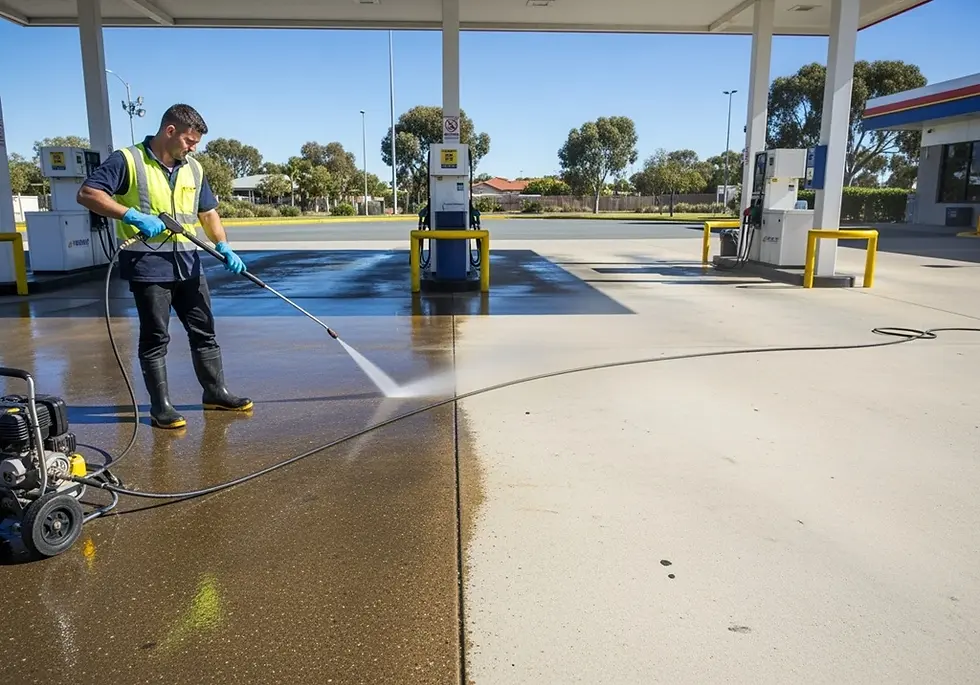
Professional-grade pressure washers deliver 3000-4000 PSI, sufficient to remove surface-level stains and blast away loosened oil particles. The technique requires proper nozzle selection and distance control. Too much pressure or holding the nozzle too close can damage concrete surfaces, creating pitting or exposing aggregate.
Use a 15-25 degree nozzle for petroleum stain removal. Maintain a distance of 150-300mm from the surface. Work in overlapping passes, moving at a consistent speed. Pre-treating with degreaser before pressure washing produces superior results compared to pressure washing alone. The chemical action loosens the oil, while mechanical action removes it.
Perth property owners dealing with extensive driveway staining often find that professional stain removal delivers results that DIY equipment cannot match. Commercial machines maintain consistent pressure and flow rates that residential units struggle to achieve.
Surface Grinding
Severely stained concrete may require grinding to remove the contaminated surface layer. This method uses diamond grinding wheels to abrade the top 1-3mm of concrete, exposing fresh material. Professional contractors use walk-behind grinders with dust collection systems for this work.
Grinding removes stains permanently but changes the surface texture and appearance. The ground area appears lighter and smoother than surrounding concrete. For uniform appearance, the entire driveway may require grinding. This approach works best when combined with sealing to protect the newly exposed surface.
Prevention And Protection Strategies
Preventing oil stains proves easier than removing them. Several strategies reduce the likelihood of staining and simplify cleanup when spills occur.
Concrete Sealing
Penetrating sealers fill concrete pores, creating a barrier against oil penetration. These products don't change concrete appearance but dramatically reduce absorption rates. Topical sealers form a protective film on the surface, offering even greater protection at the cost of changing the concrete's look and feel.
Apply sealer to clean, dry concrete. Most products require two coats for optimal protection. Reapplication every 2-3 years maintains effectiveness. Sealed concrete allows oil spills to sit on the surface longer before penetrating, providing more time for cleanup and simplifying future concrete cleaning requirements.
Drip Pans And Absorbent Mats
Place drip pans under vehicles known to leak. These simple devices catch drips before they reach the concrete. Absorbent mats designed for automotive use provide another option. These mats contain oil but allow water to pass through, preventing puddle formation during rain.
Check and empty drip pans regularly. Replace absorbent mats when saturated. Both approaches cost far less than professional stain removal or concrete replacement.
Regular Maintenance
Routine concrete cleaning prevents small drips from becoming permanent stains. Sweep driveways weekly to remove dirt and debris that can absorb and spread oil. Spot-clean any visible drips immediately using the fresh spill techniques described earlier. Annual pressure washing removes accumulated grime and light staining before it sets permanently.
Inspect vehicles regularly for leaks. Address mechanical issues promptly rather than allowing continuous dripping. A small repair cost prevents extensive concrete damage and staining.
When Professional Treatment Makes Sense
Some staining situations exceed DIY capabilities. Recognising these scenarios saves time and prevents damage from inappropriate treatment attempts.
Extensive staining covering large areas requires professional equipment and expertise. Multiple overlapping stains of different ages need varied treatment approaches applied simultaneously. Very old stains that have penetrated deeply into concrete may require specialised chemical treatments or mechanical removal techniques beyond residential equipment capabilities.
Professional stain removal services bring commercial-grade degreasers, high-pressure washing equipment (3000-4000 PSI), hot water capability that dramatically improves oil removal, surface grinding equipment when necessary, and experience identifying the most effective approach for specific stain types and ages.
Experienced technicians approach oil stain removal systematically, assessing stain age, depth, and type before selecting treatment methods. The combination of commercial equipment and specialised products often achieves results impossible with consumer-grade materials. For Perth property owners facing stubborn staining, professional assessment provides clarity on realistic outcomes and required approaches.
Perth Climate Considerations
Western Australia's climate affects both oil stain formation and removal. Understanding these factors improves treatment timing and effectiveness.
Summer heat makes oil more fluid, increasing penetration rates. Stains that might remain surface-level in cooler weather penetrate deeper during Perth's hot months. This means faster response times prove even more critical during summer. The heat also accelerates chemical reactions in degreasers, potentially improving effectiveness but requiring careful monitoring to prevent concrete damage from over-aggressive driveway stain treatment.
Winter rain can spread oil stains across larger areas before treatment occurs. Water doesn't mix with oil but can carry oil particles across concrete surfaces, creating secondary staining. Rain also complicates treatment by diluting cleaning products and preventing proper dwell time for chemical reactions.
Plan major oil stain removal projects for mild weather when possible. Spring and
autumn offer ideal conditions - warm enough for effective chemical action but without extreme heat that accelerates oil penetration or complicates treatment. Avoid attempting removal during rain or immediately before predicted rainfall.
Concrete Type And Condition Factors
Not all concrete responds identically to oil stain removal treatments. Age, finish, and existing condition influence both staining susceptibility and treatment success.
Older concrete with a weathered surface typically shows more pronounced staining. Years of exposure create micro-cracks and enlarged pores that absorb oil readily. These surfaces often require more aggressive treatment than newer concrete. However, aged concrete may also be more susceptible to damage from harsh chemicals or high-pressure washing.
Smooth-finished concrete resists staining better than rough-finished surfaces. The denser surface layer contains fewer pores for oil penetration. Broom-finished concrete, with its textured surface, creates more surface area and pore openings, increasing staining potential.
Existing concrete damage complicates petroleum stain removal. Cracks, spalling, or scaling provides pathways for deep oil penetration. These areas may require repair before or after stain removal. In some cases, the damage itself resulted from long-term oil exposure, as petroleum products can degrade concrete over time.
Commercial properties with extensive parking areas benefit from professional assessment of concrete condition alongside stain removal planning. This comprehensive approach addresses both immediate cosmetic concerns and underlying structural issues.
Restoring Your Driveway's Appearance
Oil stain removal from concrete driveways demands quick response, appropriate techniques, and realistic expectations. Fresh spills respond well to immediate absorption and degreasing. Set-in stains require chemical treatment, mechanical action, or both. The porous nature of concrete means that deeply penetrated oil may prove impossible to remove completely without surface grinding or replacement.
Prevention through concrete sealing, drip pan use, and regular maintenance eliminates most staining problems before they develop. When stains do occur, early intervention produces the best outcomes. Property owners facing extensive or stubborn staining should consider professional treatment, as commercial equipment and specialised products often achieve results beyond DIY capabilities.
Perth's climate adds complexity to both stain formation and removal, making timing and technique selection critical. Understanding how heat, rain, and UV exposure affect oil stains helps property owners respond appropriately. Coordinating driveway restoration with other exterior maintenance like gutter cleaning and solar panel cleaning creates comprehensive property care that maintains kerb appeal year-round.
For those seeking professional assistance with stubborn driveway staining, contact us for assessment and treatment options tailored to Perth conditions and concrete types. With 33+ years of exterior property maintenance experience, ProFlo understands local conditions and delivers lasting results that restore driveways to their best possible appearance.


Comments