Maintaining Clean Logistics Hubs to Prevent Winter Hazards
- 6 hours ago
- 9 min read

Perth's logistics sector operates continuously through summer while contamination accumulates invisibly across loading zones. Diesel residue from vehicle movements, hydraulic fluid from forklift operations, tyre rubber compounds worn from constant traffic, and organic material from transported goods all settle into concrete surfaces throughout the dry months. When Perth's winter rain arrives, this accumulated contamination activates as a genuine safety hazard across exactly the areas where workers and vehicles operate most intensively.
The seasonal pattern that makes Perth logistics facilities particularly vulnerable is the combination of dry accumulation and intense winter rainfall. Unlike climates where regular year-round rainfall provides some natural surface flushing, Perth's Mediterranean conditions allow contamination to build, compress, and cure through a long dry period before concentrated winter rain arrives. Each rain event in this pattern adds moisture to accumulated contamination rather than flushing it, activating the slippery film that turns an industrial floor into an accident risk.
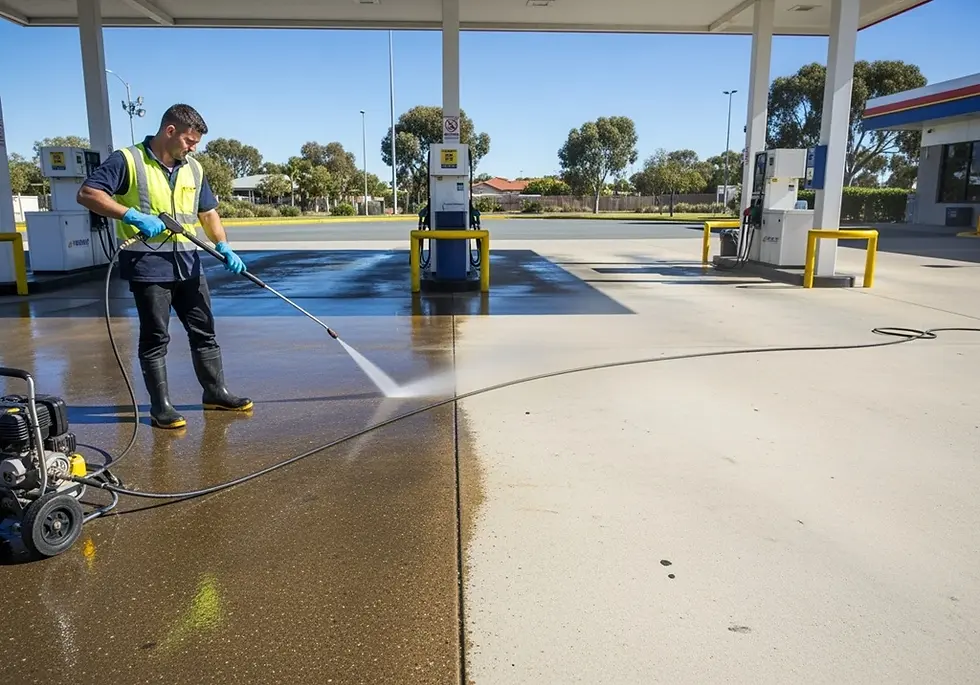
Logistics site pressure washing and freight terminal hygiene maintained before May prevents the hazards that this seasonal pattern creates. Facilities that schedule professional surface cleaning before Perth's wet season arrives enter winter with concrete that provides the grip workers and equipment depend on throughout peak operational periods.
Why Logistics Sites Become Hazardous in Winter
The Contamination Cycle in Loading Environments
Loading zones accumulate contamination through mechanisms that differ from standard commercial car parks. Diesel residue from vehicles idling during loading and unloading deposits particulates across dock approaches. Hydraulic fluid from forklifts and handling equipment drips during operations, spreading across high-traffic paths. Tyre compounds from constant rubber contact leave deposits at turning circles and reversing points. These substances do not sit on the surface in visible form - they compress into the concrete under traffic weight, bonding with the porous substrate through repeated cycles of heat and pressure.
Organic debris from transported goods adds another contamination layer that is often overlooked. Agricultural shipments carry soil and plant material that settles into surface pores. Cold chain operations involving food products leave residues that create both slip risk and hygiene concerns. General freight handling produces dust and particulate contamination from packaging, pallets, and product surfaces. In combination, these materials create the layered contamination profile that Perth logistics facilities carry into winter.
Perth's dry summer months allow this contamination to accumulate without the periodic flushing that regular rainfall provides in other climates. By April, a busy logistics facility that has been operating since the previous winter's cleaning may carry many months of compressed, bonded contamination that standard sweeping has moved around the surface but not removed from it.
Perth's Rainfall Pattern Making Things Worse
Perth's winter rainfall pattern creates specific risk conditions for industrial surfaces. Rather than steady rain that gradually builds and maintains surface wetness, Perth's winters deliver intense downpours separated by dry periods. This pattern does not allow natural surface washing to develop - instead, each downpour activates the contamination on a surface that has dried since the last event, rehydrating the oil films and creating fresh slip conditions with each rainfall cycle.
Covered loading bays and docks are particularly vulnerable because they receive enough rain exposure to wet surfaces but lack the sustained exposure that might eventually flush loose contamination. Surfaces in these transitional zones stay damp for extended periods after rain events without drying, maintaining the oil-water film that creates slip risk for longer than open areas. Cold winter mornings in Perth's industrial corridors bring temperatures that increase petroleum product viscosity, creating the maximum slip risk conditions during the pre-dawn loading window when many logistics operations run their busiest shifts.
High-Risk Zones That Demand Priority Cleaning
Loading Dock Approaches and Forklift Paths
Dock approaches receive the heaviest contamination concentration in any logistics facility. Vehicles brake repeatedly in the same positions, depositing brake dust and tyre residue that builds a glaze on the concrete. Diesel particulates settle during extended vehicle idling. These compounds compress under repeated vehicle weight into a surface layer that standard sweeping cannot dislodge. When wet, this glazed surface provides significantly reduced traction compared to clean concrete.
Forklift turning circles develop a different but equally hazardous problem. The constant tyre friction at these positions progressively polishes the concrete surface, reducing the natural texture that provides grip. Combined with the hydraulic fluid and tyre rubber deposits that accumulate at the same locations, these areas offer minimal wet traction. Forklift operators familiar with dry-season conditions can be caught off-guard when their equipment responds differently to the same turning movements in wet winter conditions.
Drainage channels and grated areas collect contamination from surrounding surfaces during rain events. Oil and debris wash toward these zones, creating concentrated deposits that block flow and form slip hazards at locations that pedestrians must step over or near during normal facility movement. Blocked drainage also causes pooling that spreads contaminated water beyond the immediate channel area, extending the slip hazard across walkways and vehicle paths.
Covered Walkways and Truck Wash Areas
Covered walkways between warehouse buildings and administrative areas receive foot traffic throughout every shift while experiencing enough moisture exposure to remain damp without the direct exposure that would eventually dry them. Workers crossing these zones throughout their shifts create repeated exposure to surfaces that may carry months of contamination activated by winter humidity. The transitional nature of these spaces means their maintenance often receives less attention than the primary loading areas.
Truck wash-down areas are counterintuitive contamination sources. The runoff from vehicle washing carries concentrated oil, fuel residue, and cleaning chemicals across surrounding surfaces. Without proper drainage design and regular surface cleaning, these zones distribute contamination to adjacent areas rather than containing it. The surfaces immediately surrounding wash bays often carry higher contamination levels than areas receiving direct vehicle traffic, because the wash runoff deposits material in concentrated form.
The Science Behind Effective Logistics Site Pressure Washing
Equipment Specifications and Cleaning Sequence
Effective logistics site pressure washing requires commercial equipment operating at pressure levels and temperatures that industrial contamination demands. Standard domestic equipment lacks both the mechanical force and heating capacity that petroleum and organic contamination requires for proper removal. Commercial systems deliver significantly higher pressure output combined with water heating capability that liquefies solidified oils and greases - substances that cold water pressure washing moves around rather than removing.
ProFlo follows a systematic cleaning sequence that addresses contamination types in the correct order. An initial high-pressure rinse removes loose surface material and reveals the actual contamination distribution. Targeted degreasers applied at appropriate dilution rates then penetrate specific contamination types - petroleum-based deposits require different chemistry than organic residues from freight handling. A dwell period allows chemical action before the pressure washing pass extracts the emulsified contamination from surface pores.
Surface Restoration and Measurable Outcomes
The measurable outcome of professional logistics site pressure washing is restored concrete surface friction. Clean concrete provides traction through its natural surface texture - the aggregate, pores, and surface profile that give footwear and tyres something to grip. Contamination fills this texture, reducing its function. Removing contamination restores the surface profile and the traction it provides.
Environmental compliance requires that contaminated runoff from logistics site cleaning does not enter Perth's stormwater infrastructure. Professional cleaning operations use vacuum recovery or containment systems that capture all wash water for appropriate disposal. This is a legal requirement rather than an optional practice - petroleum-contaminated wash water exceeds regulatory discharge limits by a substantial margin. Gutter cleaning Perth services coordinated with surface pressure washing as part of a combined pre-winter maintenance program address the overhead drainage that would otherwise compromise the surface cleaning investment during the first winter storm.
Scheduling Cleaning to Match Operational Demands
Pre-Winter Preparation and Staged Area Cleaning
Logistics facilities require maintenance scheduling that accommodates continuous operations. Comprehensive site cleaning in April or early May removes the summer contamination accumulation before winter rain arrives. This timing is critical - cleaning after rain has already activated contamination addresses the symptom rather than preventing it. Pre-rain cleaning removes hazards before the conditions that make them dangerous arrive.
Zone-based cleaning maintains operational continuity during the maintenance process. Rather than attempting full-site shutdowns, professional cleaning crews work systematically through facility sections. One loading bay receives cleaning while adjacent bays remain operational. The process rotates through the facility on a schedule that reflects contamination levels and operational priority - highest-risk and highest-traffic zones receive first attention.
Night shift scheduling suits continuous operations that cannot reduce activity during business hours. Cleaning completed between late evening and pre-dawn allows high-traffic area maintenance to finish before day shift begins, eliminating operational disruption. This approach requires service providers with flexible scheduling capability and equipment suited for overnight work.
Frequency Requirements for High-Volume Facilities
Quarterly maintenance prevents contamination from reaching hazardous accumulation levels at busy logistics facilities. Annual or biannual cleaning may be adequate for lower-volume sites, but facilities handling significant daily vehicle movements accumulate contamination at rates that require more frequent intervention to maintain safe surfaces throughout the year.
Post-incident rapid response capability matters when spills create immediate hazards. A significant fuel or hydraulic fluid release in a loading zone requires prompt cleaning rather than waiting for the next scheduled service. Commercial cleaning services that can mobilise quickly for urgent situations prevent minor incidents from creating extended hazard periods that increase incident risk.
Gutter Systems and Overhead Hazards
How Blocked Gutters Compound Loading Zone Hazards
Large warehouse roofs collect substantial water volumes during Perth's winter storms. Gutters that are blocked with the leaves, bark, and debris that Perth's native vegetation contributes year-round cannot channel this volume appropriately, creating overflow that concentrates directly onto the loading zones below. This concentrated overflow delivers roof contamination - organic debris, bird droppings, and dust - to freshly activated surface contamination, compounding the hazard.
Gutter overflow also creates erosion and surface irregularities around building perimeters. Water discharged from overflow points at volume and pressure damages paving edges, creates depressions, and produces uneven surfaces that persist as trip hazards long after gutters are eventually cleared. The interaction between overhead drainage failure and ground-level contamination creates a combined risk that either problem in isolation does not represent.
Vacuum Gutter Systems Preventing Secondary Contamination
Vacuum gutter cleaning systems address the roof drainage component of loading zone hazard management without creating additional ground-level contamination. Traditional gutter clearing drops wet debris onto the surfaces below, adding contamination to areas that may have been recently cleaned. Vacuum extraction removes all debris into sealed collection systems, preventing this cross-contamination.
Downpipe blockage presents a specific risk in logistics facilities. When a blockage holds water in a gutter system and then releases suddenly as the blockage shifts, the surge of water and debris released onto a loading zone below creates an immediate hazard for workers and equipment operators in the area. Pre-winter gutter clearing eliminates this risk by ensuring downpipes are clear before winter rain loads gutter systems to the point where blockage failures occur.
Compliance Considerations for Perth Logistics Operations
WorkSafe WA Obligations and Documentation
The Work Health and Safety Act 2020 establishes clear duty of care obligations for slip hazard identification and control in workplaces. Logistics facility operators who can demonstrate proactive hazard management through scheduled maintenance records are in a substantially stronger position when WorkSafe investigations follow incidents than those whose maintenance approach is reactive. The distinction between documented preventative maintenance and "clean when it looks dirty" practice is significant in regulatory assessment of whether adequate safety systems were in place.
Workers compensation claims arising from slip incidents generate costs that extend beyond the initial claim value. Premium increases following claims persist for multiple policy periods, compounding the financial impact of a single incident over years. Documented preventative maintenance programs that demonstrably reduce incident rates support insurance applications and may influence premium assessments.
Environmental Regulations for Industrial Runoff
Perth's environmental protection regulations prohibit petroleum product discharge into stormwater systems. Logistics site surfaces carry petroleum contamination from vehicle operations at concentrations that require proper capture and disposal rather than flushing into drainage. Professional cleaning services include appropriate waste water management as a standard component - operators who engage cleaning services that do not address this requirement carry the environmental liability for any stormwater contamination that results.
Environmental compliance documentation recording water volumes recovered, disposal facility details, and waste classification provides evidence of due diligence during environmental audits. Logistics facilities with strong environmental compliance records are better positioned when regulatory attention follows incidents or complaints.
Beyond Winter: Year-Round Benefits of Regular Maintenance
Equipment, Product, and Presentation Benefits
Forklifts and handling equipment operating on clean surfaces experience reduced wear compared to the same equipment running through contaminated areas. Tyre wear is directly influenced by surface contamination - oil films reduce friction in ways that affect tyre wear patterns and equipment stability. Hydraulic and mechanical system longevity improves when equipment operates in environments where contamination is systematically managed rather than allowed to accumulate.
Logistics providers serving food, pharmaceutical, and electronics sectors face client facility audit requirements that assess cleaning standards as part of supplier qualification. Clean, professionally maintained loading areas support positive audit outcomes in ways that contaminated facilities cannot. The business development and contract retention value of demonstrable facility maintenance standards adds a commercial dimension to the safety and compliance case for regular logistics site pressure washing and freight terminal hygiene programs. Pressure washing of building exteriors, car parks, and approach roads scheduled alongside loading area maintenance during the same site visit maximises the value of each contractor access event.
Conclusion
Perth's logistics facilities accumulate contamination through summer that winter rain converts into genuine operational hazards. The combination of petroleum residue, tyre rubber compounds, and organic material from freight operations, activated by concentrated winter rainfall on surfaces that Perth's dry season has allowed to build up over months, creates the slip conditions that injure workers and create compliance and financial exposure for facility operators.
Logistics site pressure washing scheduled before Perth's wet season removes this accumulated hazard while it can still be efficiently addressed. Freight terminal hygiene maintained on regular scheduled cycles prevents contamination from reaching the levels that require emergency intervention and keeps loading zones at the traction standards that operational safety depends on throughout the year.
To schedule professional logistics facility cleaning before Perth's winter season, get in touch with Perth's gutter cleaning professionals or email us at greg@proflowa.com.au.


Comments