Professional Pressure Washing for Perth Transport Depots
- 2 days ago
- 9 min read

Fleet vehicles bring more than deliveries through Perth's transport depots. Each vehicle entering a yard carries diesel residue, road grime, and hydraulic fluid that spreads across loading zones, workshop floors, and vehicle paths throughout normal operations. These deposits accumulate invisibly through the dry season before Perth's winter rain activates them as workplace hazards - a predictable seasonal cycle that transport depot operators who schedule professional cleaning before May can prevent rather than manage.
Standard cleaning approaches fail at the specific contamination profile that transport operations create. Sweeping redistributes particulates. Mopping spreads oil films rather than removing them. General-purpose cleaning products lack the chemical capability to break the bonds between petroleum products and industrial concrete. The contamination that builds across a Perth transport depot through a summer of operations requires hot water pressure systems, petroleum-specific chemistry, and professional technique to genuinely remove rather than move from one surface area to another.
Transport depot cleaning and industrial bay washing done properly protects three things simultaneously: workers from the slip incidents that contaminated surfaces cause when wet, facility assets from the progressive concrete deterioration that petroleum penetration creates, and the operation from the environmental compliance exposure that petroleum-contaminated runoff entering stormwater systems generates.
Why Standard Cleaning Fails in Transport Environments
The Contamination Cycle and Its Progression
Transport depots accumulate contamination through an operational cycle that no standard cleaning intervention can adequately interrupt. Every vehicle movement deposits a fraction of the road grime, brake dust, diesel particulate, and hydraulic fluid it carries into the yard. Staff and forklift operators moving between the loading area, workshop, and administrative zones carry these deposits on footwear and tyres, spreading them progressively through the facility. Within a season, the contamination that began in loading dock approaches has migrated across every high-traffic surface.
Perth's summer heat accelerates the problem. Petroleum residues on industrial concrete exposed to direct summer sun experience temperatures that bake them into the surface, creating a bond that becomes progressively stronger with each heat cycle. By the time April arrives, a busy transport depot may carry an accumulation of petroleum contamination that has been hardening since the previous winter's cleaning. Standard mopping or sweeping cannot address this bonded material - it requires the mechanical force, thermal energy, and appropriate chemistry that commercial pressure washing systems provide.
Environmental risk develops alongside the safety hazard. Contaminated runoff from transport facility surfaces carries petroleum hydrocarbons at concentrations regulated under WA environmental protection legislation. Facilities that allow this runoff to enter stormwater drainage create compliance exposure that professional cleaning services, with appropriate water containment and recovery systems, prevent as a standard component of the service.
Drainage Systems and Environmental Risk
Transport depot drainage systems accumulate petroleum sludge, metal particles, and debris that simultaneously create blockage risk and environmental hazard. As surface contamination washes toward drainage channels during rain events, the concentration of petroleum material in these collection points builds over time. Without regular professional drainage maintenance, the accumulated material eventually restricts drainage capacity during the heavy rainfall events that test systems most severely.
ProFlo includes compliant waste water management as a standard component of transport depot cleaning, capturing all contaminated wash water for appropriate disposal rather than allowing it to enter stormwater infrastructure. This practice protects clients from the environmental compliance exposure that arises when petroleum-contaminated water from cleaning operations reaches regulated discharge points.
High-Pressure Systems for Heavy Contamination
What Commercial Cleaning Delivers That Standard Methods Cannot
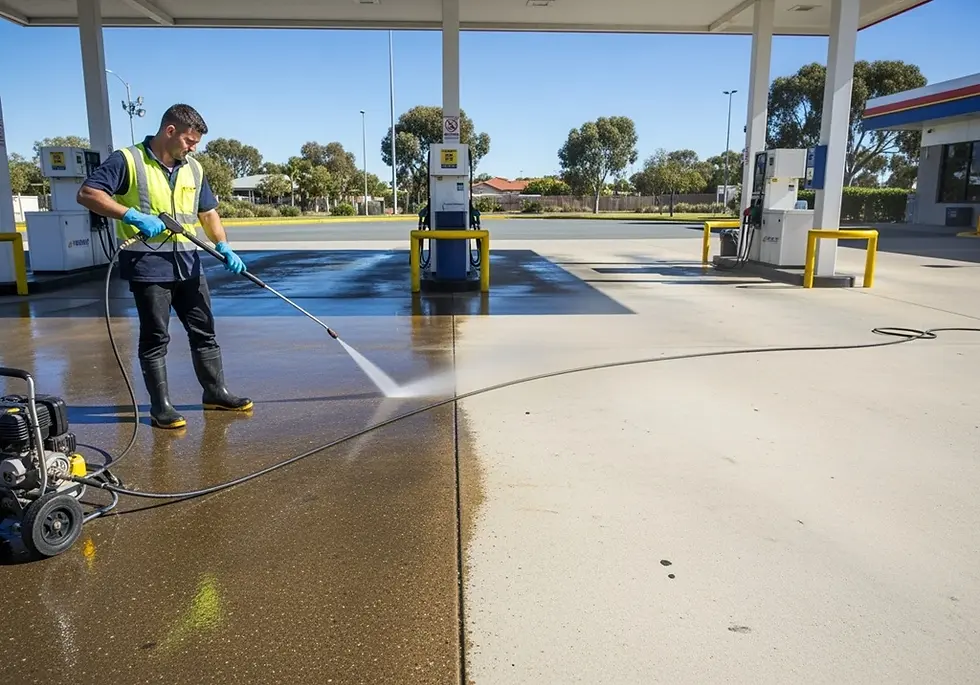
Effective transport depot cleaning requires three elements that standard approaches cannot provide: mechanical force sufficient to dislodge petroleum bonds from concrete pores, thermal energy to emulsify solidified oils and greases, and chemical agents formulated specifically for petroleum contamination removal. Commercial pressure washing systems operating with hot water capability deliver all three in combination.
The two-stage approach that professional industrial bay washing requires begins with pre-treatment. Industrial degreasers applied at appropriate dilution rates penetrate concrete pores and begin breaking the molecular bonds between petroleum contamination and the concrete substrate. This dwell period allows chemical action before the pressure washing pass extracts the emulsified material rather than simply redistributing it across the surface. This sequence addresses contamination that has accumulated over extended periods, not just the most recent surface deposits.
Surface Decontamination Mechanics
Hot water at appropriate temperatures emulsifies petroleum products in ways that cold water cannot achieve, converting bonded material from its solid adhered state into a liquid that the cleaning process can extract. The temperature requirement varies with contamination type and age - fresh diesel residue responds differently than hydraulic fluid that has been heat-cured through a Perth summer. Professional operators assess contamination characteristics and adjust temperature, pressure, and chemistry accordingly.
Pressure washing technique matters as much as equipment specification. Working systematically across surfaces with appropriate pass patterns ensures complete coverage without streaking or leaving areas undertreated. Pressure adjustment based on concrete condition - new concrete requiring gentler treatment than weathered industrial surfaces - prevents the surface damage that high-pressure water can cause when applied without consideration of substrate condition.
Loading Bay and Workshop Floor Restoration
Loading Bay Contamination Profile
Loading bays accumulate the heaviest contamination concentrations in any transport facility. Vehicles idle for extended periods during loading and unloading operations, depositing diesel particulates across dock approach surfaces. Forklift operations distribute hydraulic fluid from leaks and routine system operation. Cargo transfer activities spread product spillage, organic material from freight, and general handling contamination.
The systematic approach to loading bay restoration begins with contamination identification - the specific mix of petroleum types, organic material, and physical debris present determines the treatment sequence. Petroleum-based deposits require targeted degreasing chemistry different from organic residues. Physical debris must be removed before chemical treatment to prevent it from interfering with degreaser penetration. Applying appropriate chemistry to the correct contamination type, following the pre-treatment dwell period with hot water pressure washing, and working systematically across the entire bay area produces the surface restoration that demonstrates the difference professional transport depot cleaning delivers.
Workshop Floor Specific Challenges
Workshop floors present contamination characteristics that loading bays do not. Fine metal particles from grinding and cutting operations combine with concentrated petroleum products from maintenance activities - oils, solvents, coolants, and hydraulic fluids used during vehicle servicing. This combination requires treatment approaches that differ from general loading area methods.
Lower pressure combined with higher water volume is the appropriate technique for heavily contaminated workshop concrete. High pressure alone risks driving fine contamination deeper into concrete pores rather than extracting it. Specialised surfactants that lift contamination through chemical action rather than mechanical force alone achieve more complete removal from surfaces that carry years of workshop contamination.
Fuel Spill and Stain Remediation
Fresh Spills: Immediate Response Protocol
Fresh petroleum spills require prompt response to prevent deep concrete penetration that establishes permanent contamination. Absorbent compounds applied to fresh spills draw fuel from surface and near-surface concrete pores before it migrates deeper into the substrate. This first-response step, followed by hot water pressure washing with petroleum-specific surfactants, addresses spills while removal is still straightforward.
Time is the critical variable for spill remediation. Fresh spills treated within hours respond to standard professional cleaning procedures. Spills left for days or weeks in Perth's heat begin the curing process that progressively reduces the proportion of contamination that cleaning can remove. The residual permanent discolouration that remains after cleaning older spills is cosmetic rather than hazardous - the actual petroleum contamination has been removed even where concrete colour indicates that deep staining occurred.
Established Petroleum Stains
Established petroleum contamination in transport depot loading bays and workshop floors requires the most aggressive intervention that industrial bay washing provides. Industrial-strength degreasers containing appropriate solvent chemistry penetrate cured diesel and hydraulic fluid deposits, re-liquefying material that has bonded with concrete through repeated heat cycles. These products work by penetrating as deeply as the original contamination rather than treating only the surface layer.
Multiple pressure washing passes are often necessary for staining that has been present for many months. Each pass removes additional contamination from progressively deeper within the concrete profile. Professional operators assess progress between passes and continue treatment until the contamination is genuinely removed rather than surface-cleaned.
Drainage and Pit Cleaning
Why Transport Depot Drainage Requires Specialist Attention
Drainage pits beneath vehicle wash areas, workshop floors, and loading zones accumulate petroleum sludge, metal particles, and solid debris that represent concentrated environmental hazard. The material that settles in these pits is not safely dischargeable to stormwater systems - it requires vacuum extraction, proper containment, and licensed disposal. Pits that have not been cleaned for extended periods can contain substantial volumes of petroleum-contaminated sludge.
Confined space procedures apply to all drainage pit entry work. Professional cleaning operations include atmospheric testing before entry, continuous ventilation during cleaning, and appropriate personal protective equipment meeting the applicable Australian Standard requirements. This professional safety framework protects workers from the hazards of confined space environments that general cleaning personnel are not equipped to safely manage.
Drainage Line Clearing
High-pressure water jetting clears accumulated petroleum sludge and debris from drainage lines through a combination of pipe wall scouring and forward propulsion of the jetting nozzle through the pipe. Lines that have experienced partial blockage from contamination accumulation have their flow capacity restored by removing the material that has been progressively restricting drainage.
Gutter cleaning Perth services coordinated with drainage line clearing as part of comprehensive pre-winter facility maintenance address both the overhead and underground drainage components that determine how a facility manages
Perth's winter rainfall. Gutters that overflow onto loading zones deliver contamination directly to surfaces that have been professionally cleaned, undermining the cleaning investment. Addressing both systems together provides comprehensive drainage readiness.
Environmental Compliance and Waste Management
Perth Regulatory Requirements for Transport Operations
Environmental protection regulations in Western Australia specifically prohibit petroleum product discharge into stormwater drainage systems. Transport depot surfaces carry petroleum contamination at concentrations that far exceed stormwater discharge thresholds - wash water from cleaning these surfaces requires complete capture and appropriate disposal rather than drainage to stormwater infrastructure.
Professional transport depot cleaning includes complete wash water recovery using vacuum systems that collect contaminated water for transfer to licensed treatment facilities. Every cleaning operation generates documentation recording water recovery volumes, disposal facility details, and waste classification. This documentation provides evidence of environmental compliance during regulatory audits and demonstrates due diligence in the event of complaints or enforcement inquiries.
Wash Water Characteristics and Disposal Requirements
The petroleum hydrocarbon concentrations in transport depot wash water typically exceed acceptable stormwater discharge levels by substantial margins. This characteristic is consistent across depot types - loading bay cleaning, workshop floor washing, and vehicle wash bay maintenance all generate contaminated water that cannot be discharged to standard drainage. Oil-water separators provide an additional layer of protection but are not a complete solution - they reduce petroleum concentration without achieving discharge compliance for heavily contaminated water. Professional cleaning services use complete capture rather than relying on separators alone.
Scheduling for Operational Continuity
Zone-Based and After-Hours Scheduling
Transport depot operations rarely permit full-facility shutdowns for maintenance. Zone-based cleaning divides the facility into sections that rotate through maintenance on a schedule that allows continuous operations elsewhere. Loading bays, workshop areas, vehicle parking, wash bays, and amenities areas each receive maintenance in sequence rather than simultaneously, preserving operational capacity throughout the cleaning program.
After-hours scheduling suits operations that cannot reduce activity during standard business hours. Cleaning completed during overnight periods when vehicle movement decreases allows more comprehensive treatment without operational constraints. Pre-winter preparation in March or early April establishes clean surface baselines before Perth's rainfall season begins - the timing that most efficiently prevents the seasonal hazard pattern from developing.
Frequency by Contamination Rate and Facility Type
High-volume transport operations accumulate contamination rapidly enough to justify more frequent professional cleaning than lower-traffic facilities. The appropriate service frequency balances contamination accumulation rate against the safety threshold that defines when surfaces become hazardous. Commercial cleaning services for transport facilities develop maintenance programs based on specific facility characteristics - traffic volume, vehicle types, cargo handled, and drainage system capacity - rather than applying uniform schedules regardless of actual contamination rates.
Long-Term Surface Protection
Preventing Costly Surface Deterioration
Petroleum products penetrating industrial concrete degrade the binding compounds that give concrete its structural properties. Surface spalling and aggregate exposure develop progressively as petroleum contamination breaks down the concrete matrix from within. Regular cleaning that removes petroleum contamination before deep penetration prevents this deterioration, extending the operational life of loading bay floors, workshop surfaces, and vehicle paths that would otherwise require replacement before their design life is reached.
Post-cleaning application of penetrating sealers fills concrete pores without creating a surface film that would reduce traction. Sealed concrete resists petroleum absorption more effectively than untreated surfaces, making subsequent cleaning more straightforward and extending the interval between deep cleaning treatments. This protective measure is most cost-effective when applied to freshly cleaned concrete before the next contamination cycle begins.
Conclusion
Perth transport depots accumulate petroleum contamination, organic debris, and industrial residues through operations that standard cleaning approaches cannot adequately address. Transport depot cleaning and industrial bay washing using commercial-grade hot water systems, petroleum-specific chemistry, and professional technique removes this contamination and restores the surface friction that industrial workplaces require for safe operations through Perth's winter season and year-round.
The business case for professional transport facility maintenance encompasses safety, compliance, asset preservation, and operational efficiency simultaneously. Facilities maintained consistently on appropriate schedules carry less risk across each of these dimensions than those relying on reactive cleaning triggered by visible problems. Pre-winter cleaning before Perth's wet season is the most impactful single intervention in an annual maintenance cycle, and the right time to establish or extend a systematic depot cleaning program.
To arrange professional transport depot cleaning for your Perth facility, reach out to our pressure washing team or email us at greg@proflowa.com.au.


Comments