Multi-Unit Complex Cleaning: Coordinating Services Across Perth Strata Properties
- Mar 19
- 10 min read

Managing a strata property in Perth means juggling multiple maintenance needs across shared spaces, individual units, and external areas, all while keeping residents satisfied and property values protected. When gutters overflow during winter storms or pressure-stained driveways create poor first impressions, the responsibility falls on strata managers to coordinate effective solutions quickly.
The challenge is not just arranging cleaning services. It is scheduling work that achieves resident disruption minimisation, coordinating access to multiple levels and units, ensuring consistent quality across the entire property, and managing costs that satisfy committee budgets. Perth's climate adds another layer of complexity, with summer heat baking dirt onto surfaces and winter rainfall exposing blocked drainage systems that threaten structural damage.
Why Strata Properties Require Specialised Maintenance Coordination
Shared Infrastructure Creates Unique Challenges
Multi-unit complexes present maintenance challenges that single residential properties never face. Shared drainage systems mean one blocked gutter can cause water damage affecting multiple units. Common areas like driveways, pathways, and car parks accumulate dirt from dozens of vehicles and residents. Solar panels installed across rooftops require simultaneous cleaning to maintain consistent energy efficiency.
Coordination Requirements Beyond Physical Work
The coordination requirements extend beyond the physical work. Strata managers must notify residents about scheduled services, arrange access to locked areas, coordinate with building managers or on-site caretakers, and ensure cleaning does not disrupt residents during inconvenient hours. Professional access coordination protocols ensure systematic management of these requirements. Professional gutter cleaning services working on a 40-unit complex need clear communication protocols and systematic approaches that would not matter for a single home.
Property Types Demand Different Approaches
Perth's property market includes everything from two-storey walk-up complexes to high-rise towers with extensive common areas. Each property type demands different equipment, safety protocols, and scheduling approaches for effective strata property maintenance Perth outcomes. A vacuum gutter cleaning system that works efficiently on a three-storey building requires different access planning than servicing ground-level gutters on townhouse complexes.
Common Maintenance Challenges Across Perth Strata Complexes
Gutter and Downpipe Systems: Interconnected Drainage Risks
Most strata properties share interconnected drainage systems where blockages in one section affect water flow across multiple units. Perth's eucalyptus trees drop leaves year-round, with peak debris accumulation during autumn and spring. When gutters block, water overflows can damage facades, seep into ceiling spaces, or pool around foundations, problems that escalate quickly across multiple units.
The vacuum gutter cleaning approach removes debris without creating mess on balconies, walkways, or garden beds below. For strata properties, this matters significantly because dropped debris does not just affect one homeowner; it impacts shared spaces that require additional cleaning if contractors create mess during maintenance work.
Pressure Washing Requirements: First Impressions Matter
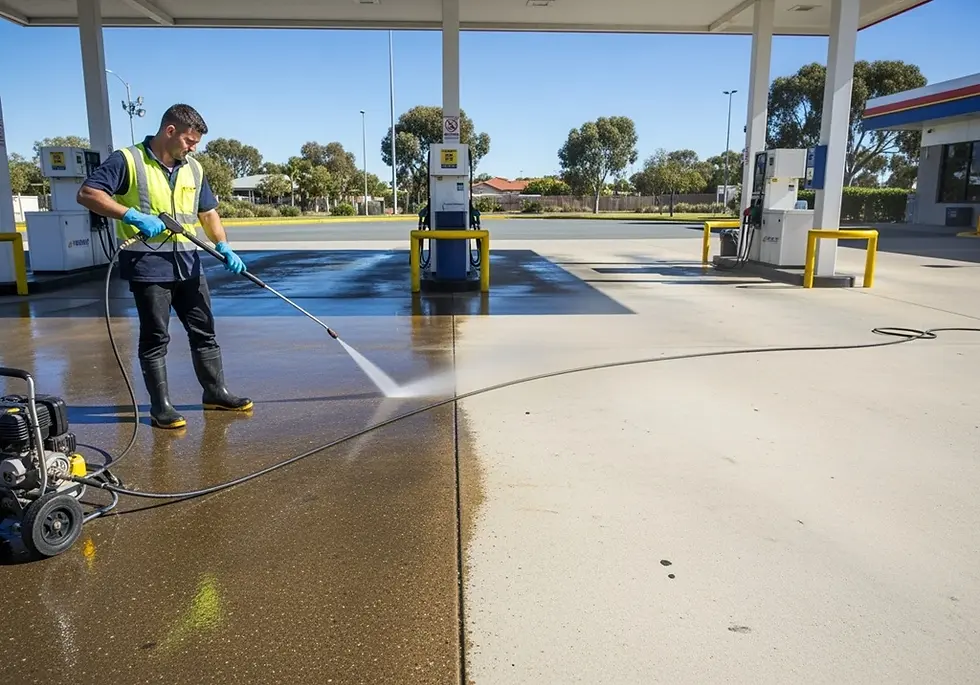
Driveways, car parks, and pathways in strata complexes accumulate oil stains, tyre marks, and ground-in dirt from constant vehicle and foot traffic. These surfaces represent the first impression for residents, visitors, and potential buyers. Stained concrete or dirty pavers suggest poor maintenance standards that affect property values and resident satisfaction.
High-pressure cleaning services address these issues systematically, but coordination matters. Cleaning car parks requires scheduling when vehicles can be moved, notifying residents about temporary access restrictions, and ensuring surfaces dry safely before reopening to traffic. The timing of this work affects dozens of residents simultaneously.
Solar Panel Efficiency: Direct Budget Impact
Many Perth strata properties installed solar systems to reduce common area electricity costs. Dust, bird droppings, and airborne pollutants accumulate on panels, reducing output by 15-30% in Perth's dry climate. For strata committees managing budgets, this efficiency loss translates directly to higher electricity bills that affect levies.
Coordinating solar panel cleaning across multi-unit buildings requires roof access planning, safety equipment for working at heights, and scheduling that considers weather conditions. Professional services handle these logistics while strata managers focus on resident communication and access coordination.
Building Facades and External Surfaces
Rendered walls, painted surfaces, and external fixtures accumulate dirt, cobwebs, and weather staining over time. In coastal Perth suburbs, salt spray accelerates this deterioration. Regular cleaning maintains appearance and prevents permanent staining that requires expensive remediation.
Developing Effective Maintenance Schedules for Strata Properties
Perth's climate creates predictable maintenance cycles that smart strata managers use to plan preventative services. Understanding these patterns allows scheduling that prevents problems rather than reacting to damage and supports effective strata property maintenance Perth programs.
Pre-Winter Preparation (April-May): Critical Timing
Before Perth's winter rainfall arrives, gutter and downpipe systems need clearing of accumulated summer debris. This timing prevents water overflow during the first heavy rains, which often catch properties unprepared after months of dry weather. Scheduling gutter cleaning services during autumn allows identifying and repairing damaged gutters before they fail under water load.
For strata properties, this pre-winter window represents the most critical maintenance period. One blocked downpipe can cause water to back up into roof spaces, affecting multiple units simultaneously. The cost of water damage remediation far exceeds preventative cleaning expenses.
Post-Storm Assessments (June-August): Winter Response
Perth's winter storms deposit leaves, twigs, and debris into gutter systems. Properties near eucalyptus trees or coastal areas face additional debris from wind-blown material. Scheduling a mid-winter inspection and cleaning prevents accumulation that leads to blockages during subsequent rainfall.
Strata managers coordinating these services need contractors who work efficiently in wet conditions and understand the urgency when drainage issues emerge during active weather patterns. Reactive callouts cost more than scheduled maintenance and create disruption when residents already face weather-related inconveniences.
Spring Refresh (September-October): Optimal Cleaning Window
As Perth transitions from winter to dry season, pressure washing removes winter dirt, algae growth, and weather staining from driveways, pathways, and building exteriors. This timing allows surfaces to dry quickly in warming weather and prepares properties for the active spring real estate market when first impressions matter.
Solar panel cleaning during spring maximises efficiency heading into summer when electricity demand peaks for cooling. The combination of winter dust removal and pre-summer optimisation delivers measurable energy savings.
Summer Maintenance (December-February): Flexible Scheduling
Perth's hot, dry summers bake dirt onto surfaces and allow dust to accumulate on solar panels. While less urgent than pre-winter gutter cleaning, summer represents an ideal window for pressure washing work. Surfaces dry quickly, and outdoor work does not face weather delays.
For strata properties, summer maintenance scheduling often works better for resident coordination because holiday periods mean fewer vehicles in car parks and more flexible access to common areas, supporting resident disruption minimisation goals.
Coordination Strategies for Resident Disruption Minimisation
The difference between smooth maintenance delivery and resident complaints often comes down to communication and scheduling coordination rather than the quality of cleaning work itself. Effective access coordination protocols prevent most coordination issues.
Advance Notice Protocols: Communication Standards
Most strata bylaws require 48-72 hours notice before contractors access common areas or create noise that affects residents. Effective strata managers provide detailed notices explaining what work occurs, expected duration, timing of any access restrictions, and contact information for questions. This approach supports resident disruption minimisation throughout the service delivery process.
This communication should specify which areas remain accessible, where contractors park vehicles, and any safety considerations like wet surfaces or temporary barriers. Clear advance notice prevents the frustration residents feel when unexpected work disrupts their routines.
Access Coordination: Systematic Planning
Multi-level properties require systematic access coordination protocols. Contractors need keys or access codes for roof spaces, stairwells, and locked common areas. For properties with security systems, temporary access arrangements must coordinate with building managers or caretaker schedules.
Commercial cleaning services experienced with strata properties maintain their own access documentation, tracking which keys or codes apply to specific properties. This organisation prevents delays where contractors arrive but cannot access work areas.
Timing Considerations: Minimising Disruption
Scheduling maintenance during mid-morning to mid-afternoon windows from 9am to 3pm avoids disrupting residents leaving for work or returning home, supporting resident disruption minimisation. Weekend work requires different considerations; Saturday mornings often work well, while Sunday maintenance typically generates more complaints.
For pressure washing that requires moving vehicles, coordinating with resident schedules becomes critical. Some strata properties designate specific car park sections for cleaning on different days, allowing residents to plan parking alternatives.
Progressive Service Delivery: Staged Approach
Rather than attempting to service an entire complex in one day, spreading work across multiple visits reduces disruption. This approach allows cleaning one section of car park while others remain fully accessible, or servicing gutters on alternating buildings during separate visits.
Progressive delivery also provides flexibility when weather interrupts outdoor work or unexpected access issues arise. The alternative of attempting to complete everything in a single rushed day often leads to quality compromises or incomplete work.
Systematic Quality Control Across Multiple Service Areas
Maintaining consistent standards across a large strata property requires systematic quality control that goes beyond completing individual tasks.
Photographic Documentation: Accountability Standards
Professional contractors photograph gutter systems before and after cleaning, showing debris removed and final clean condition. For pressure washing, before-and-after images demonstrate the effectiveness of cleaning and provide evidence of completed work. This systematic quality control approach creates accountability.
This documentation serves multiple purposes for strata managers. It provides proof of service delivery for committee meetings, helps justify maintenance expenses to residents questioning levies, and creates a visual record tracking property condition over time.
Systematic Coverage Verification: Complete Service
Large properties require checklists ensuring every gutter section, downpipe, and surface area receives attention as part of systematic quality control. Missing sections become obvious when water overflows from one uncleaned gutter while surrounding areas drain properly.
The vacuum cleaning approach used by experienced contractors provides visual confirmation of thorough debris removal. Traditional gutter cleaning methods that flush debris into downpipes may appear complete while leaving blockages that emerge during the next heavy rainfall.
Post-Service Inspections: Immediate Verification
Strata managers or building caretakers should conduct brief inspections after maintenance work concludes as part of systematic quality control processes. This verification catches any missed areas immediately while contractors remain on-site, rather than discovering problems weeks later when follow-up visits require additional scheduling and coordination.
Professional services welcome these inspections because they provide immediate feedback and prevent misunderstandings about scope of work completed.
Cost Management and Budget Planning
Strata committees managing maintenance budgets need transparent pricing structures and clear understanding of what services deliver value versus unnecessary expenses.
Scheduled Maintenance Vs Reactive Callouts
Emergency gutter cleaning during active rainfall costs significantly more than scheduled preventative maintenance. The price difference reflects urgent response requirements, working in difficult conditions, and disruption to contractor schedules.
For strata budgets, this means planned annual maintenance delivers better value than waiting for problems to emerge. A property spending $800 on scheduled bi-annual gutter cleaning avoids $2,000+ emergency callouts plus potential water damage repairs affecting multiple units.
Bundled Service Advantages: Efficiency Savings
Coordinating multiple services during single site visits reduces mobilisation costs. A contractor servicing gutters, pressure washing driveways, and cleaning solar panels during one coordinated visit operates more efficiently than three separate callouts. These bundled service advantages deliver measurable savings.
This bundling requires planning that aligns different maintenance needs, but the cost savings justify the coordination effort. Strata managers who plan comprehensive maintenance days typically achieve 15-25% cost reductions compared to scheduling services individually throughout the year, demonstrating clear bundled service advantages.
Long-Term Maintenance Agreements: Predictable Budgeting
Some strata properties establish ongoing relationships with maintenance providers, scheduling regular services at agreed intervals. These arrangements provide budget predictability and often include priority response for urgent issues between scheduled visits.
For contractors, regular clients justify investment in property-specific knowledge like access coordination protocols, drainage system layouts, and resident communication preferences that improve service efficiency over time.
Safety Compliance and Insurance Considerations
Strata properties face different liability considerations than individual homes. When contractors work on common areas, the strata corporation shares responsibility for ensuring proper safety protocols and adequate insurance coverage.
Working at Heights Requirements
Gutter cleaning and solar panel maintenance on multi-storey buildings requires proper fall protection equipment, trained personnel, and compliance with workplace safety regulations. Strata managers should verify contractors hold appropriate safety certifications and use compliant equipment.
Professional services maintain detailed safety documentation including risk assessments, equipment inspection records, and staff training certificates. This documentation protects both the contractor and strata corporation if incidents occur.
Public Liability Insurance: Protection Standards
Contractors working on strata properties need substantial public liability coverage protecting against property damage or injury to residents. Minimum coverage of $10 million applies for most commercial property work, with some larger complexes requiring $20 million coverage.
Strata managers should request current certificates of currency before contractors commence work. This verification prevents situations where incidents occur but contractor insurance proves inadequate or expired.
Site Safety Management: Resident Protection
Pressure washing creates slip hazards on wet surfaces. Gutter cleaning may require temporary barriers preventing debris falling on pedestrians below. Professional contractors implement safety protocols including warning signage, temporary fencing where necessary, and systematic approaches that minimise risks to residents and visitors.
For strata properties, these safety considerations extend beyond contractor obligations. The strata corporation must ensure adequate notice allows residents to avoid work areas and that safety measures remain in place until surfaces dry or work areas become safe for normal use.
Selecting Maintenance Providers for Strata Properties
The contractor selection process for strata properties differs from choosing services for individual homes. The coordination requirements, quality consistency needs, and professional standards matter more when work affects dozens of residents simultaneously.
Experience with Multi-Unit Properties
Contractors familiar with strata work understand the communication protocols, access coordination protocols, and systematic approaches that large properties require. This experience shows in their quoting process, scheduling flexibility, and ability to work efficiently across complex properties.
Questions about how they handle resident complaints, their approach to access coordination, and examples of similar properties they service reveal whether contractors truly understand strata requirements or primarily work on individual homes.
Equipment and Methodology: Quality Standards
The cleaning methods and equipment contractors use directly affect work quality and resident disruption. Vacuum gutter cleaning systems that contain debris prevent mess on balconies and common areas below. Commercial-grade pressure washers with appropriate surface cleaners deliver consistent results across large areas efficiently, enabling systematic quality control.
Contractors using inappropriate equipment or outdated methods may quote lower prices but deliver inconsistent results requiring additional follow-up work that ultimately costs more in time and coordination effort.
Communication and Responsiveness: Service Excellence
Strata managers need contractors who respond promptly to enquiries, provide clear documentation, and communicate proactively about scheduling or any issues arising during work. This responsiveness matters more for strata properties than individual homes because delays or poor communication affect multiple residents simultaneously.
Trial services on smaller maintenance tasks before committing to comprehensive contracts allows evaluating contractor performance and communication quality with limited risk.
Conclusion
Proflo has spent 33 years developing systematic approaches that address these coordination challenges. The difference between reactive maintenance and planned service delivery shows clearly in property condition, resident satisfaction, and long-term repair costs.
Effective strata property maintenance Perth requires more than arranging cleaning services; it demands systematic coordination that balances resident needs, property protection, cost management, and quality standards. The difference between properties that maintain value and appearance versus those that deteriorate into expensive repair situations often comes down to planned preventative maintenance rather than reactive crisis management.
Perth's climate creates predictable maintenance cycles around winter rainfall, summer heat, and seasonal debris patterns. Strata managers who schedule services aligned with these patterns prevent problems before they cause damage affecting multiple units. The cost difference between preventative maintenance and emergency repairs consistently favours proactive approaches that leverage bundled service advantages.
Coordination challenges including resident communication, access planning, and service scheduling require contractors experienced with multi-unit properties who understand these complexities. Professional services bring systematic approaches, appropriate equipment, and communication protocols that achieve resident disruption minimisation while delivering consistent quality across entire properties.
For comprehensive strata property maintenance that addresses your property's coordination requirements, contact our team to discuss exterior cleaning services developed over 33+ years of serving Perth strata properties.


Comments